
RecurrenceTable
RecurrenceTable[eqns,expr,{n,nmax}]
generates a list of values of expr for successive n based on solving the recurrence equations eqns.
RecurrenceTable[eqns,expr,nspec]
generates a list of values of expr over the range of n values specified by nspec.
RecurrenceTable[eqns,expr,{n1,…},{n2,…},…]
generates an array of values of expr for successive n1, n2, … .
Details and Options
- The eqns must be recurrence equations whose solutions over the range specified can be determined completely from the initial or boundary values given.
- The eqns can involve objects of the form a[n+i] where i is any fixed integer.
- The range specification nspec can have any of the forms used in Table.
- The following options can be given:
-
DependentVariables Automatic the list of all dependent variables Method Automatic method to use WorkingPrecision Automatic precision used in internal computations - With DependentVariables->Automatic, RecurrenceTable attempts to determine the dependent variables by analyzing the equations given.
- With WorkingPrecision->Automatic, results for exact inputs are computed exactly, and for inexact inputs, the precision to use is determined adaptively at each iteration.
- With WorkingPrecision->p, a fixed precision p is used for all iterations.
- RecurrenceTable[u[t]sys,resp,{t,tmin,tmax}] can be used for solving discrete-time models, where sys can be a TransferFunctionModel or a StateSpaceModel and the response function resp can be one of the following: »
-
"StateResponse" state response of sys to the input 
"OutputResponse" output response of sys to the input 
Examples
open all close allBasic Examples (4)
Solve an initial-value problem for a first-order difference equation:
RecurrenceTable[{a[n + 1] == 3a[n], a[1] == 7}, a, {n, 1, 10}]Find the first few Fibonacci numbers:
RecurrenceTable[{a[n] == a[n - 1] + a[n - 2], a[1] == 1, a[2] == 1}, a,
{n, 10}]Table[Fibonacci[n], {n, 10}]Study the evolution for a nonlinear map of the plane:
RecurrenceTable[{x[n + 1] == 0.7x[n] + y[n],
y[n + 1] == -0.7989995 + x[n] ^ 2, x[0] == 0.142857, y[0] == 0.33}, {x, y}, {n, 1, 2500}]//ShortListPlot[%, PlotRange -> All]Compute a table of Stirling numbers of the first kind:
RecurrenceTable[{s1[n, k] == s1[n - 1, k  - 1] - (n - 1)s1[n  - 1, k],
s1[0, k] == KroneckerDelta[k]}, s1, {n, 0, 6}, {k, 0, 4}]//GridTable[StirlingS1[n, k], {n, 0, 6}, {k, 0, 4}]//GridScope (12)
Ordinary Difference Equations (6)
Linear ordinary difference equation with exact coefficients:
RecurrenceTable[{a[n + 2] == 3n a[n + 1] + 5a[n], a[1] == 1, a[2] == 1}, a, {n, 1, 10}]Nonlinear ordinary difference equation with inexact coefficients:
RecurrenceTable[{a[n] == 1.3a[n - 2] ^ 2 + 5.2a[n - 1], a[1] == 1, a[2] == 2}, a, {n, 1, 6}]System of ordinary difference equation with symbolic initial conditions:
RecurrenceTable[{2 x[n + 1] + Mod[n, 5] ^ 2 y[n] == n, 5 x[n] - y[n + 1] == 7, x[1] == a, y[1] == b}, {x, y}, {n, 1, 3}]//TogetherRecurrenceTable[{2 x[n + 1] + Mod[n, 5] ^ 2 y[n] == n, 5 x[n] - y[n + 1] == 7, x[1] == a, y[1] == b}, x, {n, 1, 3}, DependentVariables -> {x, y}] // TogetherIterate using exact arithmetic:
RecurrenceTable[{x[n + 1] == (7/2)x[n](1 - x[n]), x[0] == (1/3)}, x, {n, 10}]Iterate using adaptive arithmetic starting with precision 20:
RecurrenceTable[{x[n + 1] == (7/2)x[n](1 - x[n]), x[0] == N[(1/3), 20]}, x, {n, 10}]The precision decreases with each iteration:
ListPlot[Map[Precision, %]]Iterate using fixed 20-digit-precision arithmetic:
RecurrenceTable[{x[n + 1] == (7/2)x[n](1 - x[n]), x[0] == (1/3)}, x, {n, 10}, WorkingPrecision -> 20]Iterate using machine arithmetic:
RecurrenceTable[{x[n + 1] == (7/2)x[n](1 - x[n]), x[0] == (1/3)}, x, {n, 10}, WorkingPrecision -> MachinePrecision]Iterate several values at once by giving a vector initial condition:
Grid[Partition[Map[ListPlot[#, DataRange -> {0, 1}, PlotStyle -> PointSize[0.01]]&, RecurrenceTable[{x[n + 1] == .9 Sin[π x[n]], x[0] == N[Range[0, 1000] / 1000]}, x, {n, 0, 8}]], 3]]Map[MatrixForm, RecurrenceTable[{m[k + 1] == m[k].(| | |
| -- | -- |
| .1 | 1 |
| 0 | .1 |).m[k], m[0] == (| | |
| - | -- |
| 0 | -1 |
| 1 | 0 |)}, m, {k, 3}]]Partial Difference Equations (2)
Use the partial recurrence equations for binomial coefficients:
RecurrenceTable[{binomial[n, k] == binomial[n - 1, k] + binomial[n - 1, k - 1], binomial[0, k] == KroneckerDelta[k]}, binomial, {n, 0, 8}, {k, 0, 8}]//GridProcedural solution for a nonlinear partial difference equation:
RecurrenceTable[{f[n, k] == f[n - 1, k] ^ 2 + n ^ 2f[n - 1, k - 1], f[0, k] == 3k + 1.}, f, {n, 0, 20}, {k, 0, 20}];MatrixPlot[Log[1 + Abs[%]]]Difference-Algebraic Equations (1)
Solve a linear difference-algebraic equation with constant coefficients:
sol1 = RecurrenceTable[{y[n + 1] + z[n + 1] == y[n] - 3z[n] + 7, y[n] + 2z[n] == 1, y[0] == 1 / 2, z[0] == 1 / 4}, {y, z}, {n, 0, 4}]//QuietCompare with the symbolic solution given by RSolve:
RSolve[{y[n + 1] + z[n + 1] == y[n] - 3z[n] + 7, y[n] + 2z[n] == 1, y[0] == 1 / 2, z[0] == 1 / 4}, {y, z}, n]sol2 = Table[{y[n], z[n]} /. %[[1]], {n, 0, 4}]System Models (3)
The state response and the output response of a state-space model to a sampled sinusoid:
sr = RecurrenceTable[Sin[t] -> StateSpaceModel[{{{0, 1}, {-0.5, 1.5}}, {{0}, {1}}, {{0, 1}}, {{0}}}, SamplingPeriod -> 1,
SystemsModelLabels -> None], "StateResponse", {t, 0, 15}]ListStepPlot[sr, DataRange -> {0, 15}]or = RecurrenceTable[Sin[t] -> StateSpaceModel[{{{0, 1}, {-0.5, 1.5}}, {{0}, {1}}, {{0, 1}}, {{0}}}, SamplingPeriod -> 1,
SystemsModelLabels -> None], "OutputResponse", {t, 0, 15}]ListStepPlot[or, DataRange -> {0, 15}]The state response of a discrete-time system with initial conditions {1,-1}:
sr = RecurrenceTable[{Sin[t] -> StateSpaceModel[{{{0.9418, 0.2462}, {-0.2462, 0.3262}}, {{0.1958}, {-0.0291}}, {{2, 1}}, {{0}}},
SamplingPeriod -> 0.2, SystemsModelLabels -> None], {1, -1}}, "StateResponse", {t, 0, 10}]ListStepPlot[sr, DataRange -> {0, 10 0.2}]The output response of a two-input system:
or = RecurrenceTable[{Sin[k], Cos[k]} -> TransferFunctionModel[{{{z, -0.1 + z}, {1, 4}},
  {{-0.5 + z, 0.5 + z}, {-0.5 + z, 0.5 + z}}},
z, SamplingPeriod -> 0.1], "OutputResponse", {k, 0, 3}]ListStepPlot[or, DataRange -> {0, 3 0.1}]Generalizations & Extensions (3)
Generate a subset of values from a given range:
RecurrenceTable[{a[n] == a[n - 1] + a[n - 2], a[1] == 1, a[2] == 1}, a, {n, 1, 15}]RecurrenceTable[{a[n] == a[n - 1] + a[n - 2], a[1] == 1, a[2] == 1}, a, {n, 1, 15, 2}]Get only the last value from an iteration:
Timing[First[RecurrenceTable[{x[n + 1] == π Sin[π x[n]], x[0] == .1}, x, {n, 10 ^ 6, 10 ^ 6}]]]This is faster than when all the values are saved:
Timing[Last[RecurrenceTable[{x[n + 1] == π Sin[π x[n]], x[0] == .1}, x, {n, 10 ^ 6}]]]Use a vector initial condition:
RecurrenceTable[{x[n + 1] == π Sin[π x[n]], x[0] == Range[0, 1, .1]}, x, {n, 5}]Options (3)
DependentVariables (1)
Use DependentVariables to specify the variables when you only want to save some of them:
RecurrenceTable[{x[n + 2] == y[n], y[n + 1] == -x[n], x[0] == 1, x[1] == 0, y[0] == 0}, x, {n, 0, 3}, DependentVariables -> {x, y}]RecurrenceTable[{x[n + 2] == y[n], y[n + 1] == -x[n], x[0] == 1, x[1] == 0, y[0] == 0}, y, {n, 0, 3}, DependentVariables -> {x, y}]RecurrenceTable[{x[n + 2] == y[n], y[n + 1] == -x[n], x[0] == 1, x[1] == 0, y[0] == 0}, {y, x}, {n, 0, 3}, DependentVariables -> {x, y}]Method (1)
Use Method->{Compiled->False} to prevent the Wolfram Language compiler from being used:
m = 10 ^ 6;
reqn = {x[n + 1] == Nest[(4 #(1 - #))&, x[n], 2], x[0] == .314}Timing[Last[compiled = RecurrenceTable[reqn, x, {n, m}]]]Timing[Last[justrun = RecurrenceTable[reqn, x, {n, m}, Method -> {Compiled -> False}]]]Results differ due to arithmetic change from optimization:
ListPlot[Take[Abs[compiled - justrun], 50], PlotRange -> All]WorkingPrecision (1)
Use WorkingPrecision->MachinePrecision for the fastest iterations:
reqn = {x[n + 1] == (9 / 5)If[x[n] < 1 / 2, x[n], 1 - x[n]], x[0] == 1 / 3};Timing[Mean[RecurrenceTable[reqn, x, {n, 10 ^ 6}, WorkingPrecision -> MachinePrecision]]]Use WorkingPrecision->p for slower, but higher-precision iterations:
Timing[Mean[RecurrenceTable[reqn, x, {n, 10 ^ 6}, WorkingPrecision -> 50]]]Exact computations have no error, but may be very slow indeed:
Timing[Mean[RecurrenceTable[reqn, x, {n, 10 ^ 4}]];]Applications (6)
Logistic Equations (1)
Random Number Generation (1)
Implement the Cliff random number generator:
RecurrenceTable[{x[n + 1] == Abs[Mod[100Log[x[n]], 1]], x[0] == 0.1}, x, {n, 0, 4}]The random numbers appear to be uniformly distributed:
RecurrenceTable[{x[n + 1] == Abs[Mod[100Log[x[n]], 1]], x[0] == 0.1}, x, {n, 1, 1000}]//ListPlotCompare with the parameters for the uniform distribution:
t = RecurrenceTable[{x[n + 1] == Abs[Mod[100Log[x[n]], 1]], x[0] == 0.1}, x, {n, 1, 10 ^ 5}];({Mean[#1], Variance[#1], Skewness[#1], Kurtosis[#1]} & )[t]N[({Mean[#1], Variance[#1], Skewness[#1], Kurtosis[#1]} & )[UniformDistribution[{0, 1}]]]Rabbit Fractal (1)
Plot the Douady rabbit fractal:
c = -0.122561 + 0.744862I;Initial condition with 250 points in each direction on the rectangle with corners 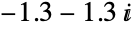 and
and 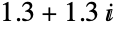 :
:
zinit = Table[a + I b, {a, -1.3, 1.3, 2.6 / 249}, {b, -1.3, 1.3, 2.6 / 249}];Iterate starting from these initial conditions:
Timing[iterates = RecurrenceTable[{z[k + 1] == z[k] ^ 2 + c, z[0] == zinit}, z, {k, 0, 20}];]Use ArrayPlot to show the fractal:
data = Map[If[Max[Abs[#]] ≤ 2, 1, 0]&, Flatten[iterates, {{2}, {3}, {1}}], {2}];ArrayPlot[data]Bifurcation Diagram of the Logistic Map (1)
Find iterates from  and
and  of the map
  for 1000 values of
  :
:
k = 1000; r = Range[3., 4., 1 / (k - 1)];
rhs[x_ ? VectorQ] := r x(1 - x);iterates = RecurrenceTable[{x[n + 1] == rhs[x[n]], x[0] == ConstantArray[1. / π, k]}, x, {n, 10 ^ 4, 2 10 ^ 4}];//TimingScale the iterates to be integers between 1 and  and transpose so the rows correspond to
  :
:
data = Transpose[Ceiling[iterates k]];Define a function that gives a rule based on the logarithm of counts of each value:
count[data_, i_] := Module[{c, j},
	{j, c} = Transpose[Tally[data]];
	Transpose[{j, ConstantArray[i, Length[j]]}] -> Log[N[c]]];
Make a sparse matrix based on applying Count to the iterates for each  :
:
S = SparseArray[Table[count[data[[i]], i], {i, k}], k]Use ArrayPlot to make the bifurcation diagram:
ArrayPlot[Reverse[S], ColorFunction -> "Rainbow"]Compare Numerical Methods for ODEs (1)
For  , Euler's method is unconditionally unstable:
ListPlot[Block[{h = .1}, RecurrenceTable[
	{x[n + 1] == x[n] + h y[n], x[0] == 1.0,
	y[n + 1] == y[n] - h Sin[x[n]], y[0] == 0.},
	{x, y}, {n, 0, 300}]]]
The symplectic Euler method is stable, but is very sensitive to initial conditions for large h:
se[h_, {x0_, y0_}]  := RecurrenceTable[
	{x[n + 1] == x[n] + h y[n], x[0]  == x0,
	y[n + 1] == y[n] - h Sin[x[n] + h y[n]], y[0] == y0},
	{x, y}, {n, 0, 500}];ListPlot[{se[.1, {2.67, 0.}], se[1., {2.67, 0.}], se[1., {2.66, 0.}]}]
Compare the methods for different vector fields with Manipulate:
Manipulate[
Block[{n, f1, f2, rhs, req, vfn},
vfn = vf /. {x -> x[n], y -> y[n]};
If[method === "Euler",
rhs = {x[n], y[n]} + h * vfn,
f1 = x[n] + h * First[vfn];
f2 = y[n] + h * (Last[vfn] /. x[n] -> f1);
rhs = {f1, f2}];
req = Thread[{x[n + 1], y[n + 1]} == rhs];
ListPlot[RecurrenceTable[{req /. h -> hh, Thread[{x[0], y[0]} == p]}, {x, y}, {n, 0, Ceiling[10 ^ ls]}], PlotRange -> {{-4, 4}, {-3, 3}}, PlotLabel -> ToString[req, TraditionalForm]]],
{{p, {2.67, 0}}, Locator}, {{ls, 4, "SubscriptBox[log, 10](SubscriptBox[n, max])"}, 1, 6}, {{hh, 1., "StepSize"}, 10 ^ -4, 2}, {{vf, {y, -Sin[x]}, "Vector Field"}, {{y, -x}, {y, -Sin[x]}, {y, x * (1 - x ^ 2)}}, ControlType -> PopupMenu}, {method, {"SymplecticEuler", "Euler"}}]Standard Map (1)
Stretching and folding induced by the standard map for a line of initial conditions [more info]:
Block[{k = 1, m = 10000}, Grid[Partition[MapIndexed[Tooltip[ListPlot[Transpose[#1], PlotStyle -> PointSize[0.01], PlotRange -> {{0, 2π}, {-2.5, 2.5}}], n == First[#2] - 1]&, RecurrenceTable[{
	x[n + 1] == Mod[y[n] + x[n] + k Sin[x[n]], 2π], x[0] == ConstantArray[N[π], m], y[n + 1] == y[n]  + k Sin[x[n]], y[0] == N[2 Range[m] / (m)]},
	{x, y}, {n, 0, 11}]], 3]]]
Properties & Relations (3)
RSolve finds a symbolic solution for this difference equation:
RSolve[{a[n + 1] == 2a[n] + 1, a[0] == 7}, a, n]Table[a[n] /. %[[1]], {n, 0, 7}]RecurrenceTable generates a procedural solution for the same problem:
RecurrenceTable[{a[n + 1] == 2a[n] + 1, a[0] == 7}, a, {n, 0, 7}]Use RecurrenceFilter to filter a signal:
RecurrenceFilter[{{1, -(1/2)}, {1}}, {1, 0, 0, 0, 0, 0, 0, 0}]Obtain the same result using RecurrenceTable:
RecurrenceTable[{y[n] - (1/2)y[n - 1] == DiscreteDelta[n], y[-1] == 0}, y[n], {n, 0, 7}]Use RFixedPoints to find fixed points of a nonlinear recurrence equation:
RFixedPoints[x[n + 1] == (1/2)x[n](1 - x[n]), x, n]Use RStabilityConditions to analyze the stability of the fixed points:
RStabilityConditions[x[n + 1] == (1/2)x[n](1 - x[n]), x, n]Solve the equation using RecurrenceTable:
sol = RecurrenceTable[{x[n + 1] == (1/2)x[n](1 - x[n]), x[0] == -9 / 10}, x, {n, 0, 20}, WorkingPrecision -> 10]ListPlot[sol, PlotRange -> All]Neat Examples (1)
Visualize the smoothing of the initial data for the heat equation using the discretized version:
c = 1; k = 1 / 320; h = 0.08;sol = RecurrenceTable[{v[i, j] == c((1 - (2 k) / h ^ 2)v[i, j - 1] + (k(v[i + 1, j - 1] + v[i - 1, j - 1])) / h ^ 2),
v[i, 0] == UnitStep[2. - i h]UnitStep[i h + 2]100}, v, {i, -70, 70}, {j, 0, 300}];Table[ListLinePlot[Transpose[sol][[i]], Filling -> Axis, Ticks -> None], {i, {1, 20, 100, 300}}]ListPlot3D[Transpose[sol], Mesh -> None, PlotStyle -> {Orange, Specularity[White, 10]}]Related Links

 MathWorld
Text
Wolfram Research (2008), RecurrenceTable, Wolfram Language function, https://reference.wolfram.com/language/ref/RecurrenceTable.html (updated 2024).
CMS
Wolfram Language. 2008. "RecurrenceTable." Wolfram Language & System Documentation Center. Wolfram Research. Last Modified 2024. https://reference.wolfram.com/language/ref/RecurrenceTable.html.
APA
Wolfram Language. (2008). RecurrenceTable. Wolfram Language & System Documentation Center. Retrieved from https://reference.wolfram.com/language/ref/RecurrenceTable.html