Fundamentals of Queueing Theory
Fundamentals of Queueing Theory
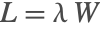
𝒬 = QueueingProcess[λ, μ];QueueProperties[𝒬 , "QueueDiagram"]L = QueueProperties[𝒬, "MeanSystemSize"]W = QueueProperties[𝒬, "MeanSystemTime"]L == λ W𝒩 = QueueingNetworkProcess[(| |
| -- |
| 3. |
| 0 |
| 0 |), (| | | |
| - | - | - |
| 0 | 1 | 0 |
| 0 | 0 | 1 |
| 0 | 0 | 0 |), (| |
| --- |
| 4 |
| 7 |
| 8.2 |), (| |
| - |
| 1 |
| 1 |
| 1 |)];Probability[x == 2 && y == 1 && z == 3, {x, y, z}𝒩[∞]]Probability[x == 2 && y == 1 && z == 3, {x, y, z}ProductDistribution[QueueingProcess[3, 4][∞], QueueingProcess[3, 7][∞], QueueingProcess[3, 8.2][∞]]]Probability[n == c,
Distributed[n, StationaryDistribution[QueueingProcess[λ, μ, c, c]]],
Assumptions -> Element[c, Integers] && c > 0]Use the built-in ErlangB function to compute the same result:
ErlangB[c, λ / μ]FullSimplify[% - %%]