Complex Polynomial Systems
| Introduction | Arbitrary Complex Polynomial Systems |
| Gröbner Bases | Options |
| Decision Problems | References |
| Quantifier Elimination |
Introduction
The Wolfram Language functions Reduce, Resolve, and FindInstance allow you to solve a wide variety of problems that can be expressed in terms of equations and inequalities. The functions use a collection of algorithms applicable to classes of problems satisfying particular properties, as well as a set of heuristics that attempt to reduce the given problem to a sequence of problems that can be solved using the algorithms. This tutorial describes the algorithms used to solve the class of problems known as complex polynomial systems. It characterizes the structure of the returned answers and describes the options that affect various aspects of the methods involved.
A complex polynomial system is an expression constructed with polynomial equations and inequations

combined using logical connectives and quantifiers

An occurrence of a variable  inside
  or
or  is called a bound occurrence, and any other occurrence of
  is called a free occurrence. A variable
  is called a free variable of a complex polynomial system if the system contains a free occurrence of
  . A complex polynomial system is quantifier-free if it contains no quantifiers.
Here is an example of a complex polynomial system with free variables  ,
,  , and
, and  .
.

In the Wolfram Language, quantifiers are represented using the functions Exists ( ) and ForAll (
 ).
).
Any complex polynomial system can be transformed to the prenex normal form

where each  is a quantifier
  or
or  , and
, and  is quantifier-free.
Any quantifier-free complex polynomial system can be transformed to the disjunctive normal form

where each  is a polynomial equation or inequation.
Reduce, Resolve, and FindInstance always put complex polynomial systems in the prenex normal form, with quantifier-free parts in the disjunctive normal form, and subtract the sides of the equations and inequations to put them in the form

In all the tutorials for complex polynomial system solving, assume that the system has been transformed to this form.
Reduce can solve arbitrary complex polynomial systems. The solution (possibly after expanding  with respect to
  ) is a disjunction of terms of the form

where 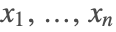 are the free variables of the system, each
  is a polynomial, each
  is an algebraic function expressed using radicals or Root objects, and any terms of the conjunction (2) may be absent. Each
  is well defined, that is, no denominators or leading terms of Root objects in
  become zero for any
 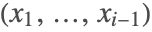 satisfying the preceding terms of the conjunction (2).
Reduce[x^2 + y^2 == z^2 && Subscript[∃, t](Subscript[∀, u]t x ≠ u y z + 7 || x^2 t == 2 z + 1), {x, y, z}]Resolve can eliminate quantifiers from arbitrary complex polynomial systems. If no variables are specified, the result is a logical combination of terms

where  and
and  are polynomials, and each
  is a free variable of the system. With variables specified in the input, Resolve gives the same answer as Reduce.
Resolve[x^2 + y^2 == z^2 && Subscript[∃, t](Subscript[∀, u]t x ≠ u y z + 7 || x^2 t == 2 z + 1)]FindInstance can handle arbitrary complex polynomial systems giving instances of complex solutions, or an empty list for systems that have no solutions. If the number of instances requested is more than one, the instances are randomly generated from the full solution of the system, and therefore they may depend on the value of the RandomSeed option. If one instance is requested, a faster algorithm that produces one instance is used, and the instance returned is always the same.
FindInstance[x^2 + y^2 == z^2 && Subscript[∃, t](Subscript[∀, u]t x ≠ u y z + 7 || x^2 t == 2 z + 1), {x, y, z}]The main tool used in solving complex polynomial systems is the Gröbner basis algorithm [1], which is available in the Wolfram Language as the GroebnerBasis function.
Gröbner Bases
Theory
This section gives a very brief introduction to the theory of Gröbner bases. It presents only the properties that are necessary to describe the algorithms used by the Wolfram Language in solving complex polynomial systems. For a more complete presentation see, for example, [1, 2]. Note that what [2] calls a monomial, [1] calls a term, and vice versa. This tutorial uses the terminology of [1].
A monomial in 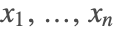 is an expression of the form
 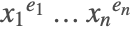 with non‐negative integers
  .
.
Let  be the set of all monomials in
 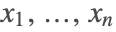 . A monomial order is a linear order
  on
on  , such that
  for all
  , and
, and  implies
 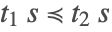 for all
 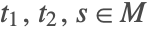 .
.
Let  be a field, the domain of integers, or the domain of univariate polynomials over a field. Let
  and
and  be functions
  defined as follows. If
  is a field,
  , and
, and  . If
. If  is the domain of integers,
  and
and  are the integer quotient and remainder functions, with
  . If
. If  is the domain of univariate polynomials over a field,
  and
and  are the polynomial quotient and remainder functions.
A product  , where
  is a nonzero element of
  and
and  is a monomial, is called a term.
Let  be a monomial order on
  , and let
  . The leading monomial
  of
of  is the
  -largest monomial appearing in
  , the leading coefficient
  of
of  is the coefficient at
  in
in  , and the leading term
  of
of  is the product
 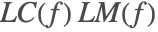 .
.
A Gröbner basis of an ideal  in
in 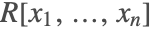 , with respect to a monomial order
  , is a finite set
  of polynomials, such that for each
  , there exists
  , such that
  divides
  . Every ideal
  has a Gröbner basis (see [1] for a proof).
Let  , and let
  be a monomial. A term
  is reducible modulo
  , if
, if  divides
  , and
, and  . If
. If  is reducible modulo
  , the reduction of
  modulo
  is the polynomial

Note that if  , then
  ; otherwise,
  .
.
Let  , and let
  be an ordered finite subset of
  .
.  is reducible modulo
  if
if  contains a term reducible modulo an element of
  . The reduction
 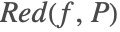 of
of  modulo
  is defined by the following procedure. While the set
  of terms of
  reducible modulo an element of
  is not empty, take the term
  with the
  -largest monomial, take the first
  , such that
  is reducible modulo
  , and replace the term
  in
in  with
with 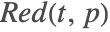 . Note that the monomials of terms
  chosen in subsequent steps of the procedure form a
  -descending chain, and each monomial can appear at most
  times, where
  is the number of elements of
  , hence the procedure terminates.
A Gröbner basis  is semi-reduced if for all
  ,
,  is not reducible modulo
  , and if
  is the domain of integers,
  .
.
The Wolfram Language function GroebnerBasis returns semi-reduced Gröbner bases. In the following discussion, all Gröbner bases are assumed to be semi-reduced. Note that this is not the same as reduced Gröbner bases defined in the literature, since here the basis polynomials are not required to be monic. For a fixed monomial order, every ideal has a unique reduced Gröbner basis. Semi-reduced Gröbner bases defined here are only unique up to multiplication by invertible elements of  (see Property 2).
Property 1: Let  be a Gröbner basis of an ideal
  in
in 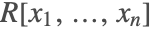 , and let
  . Then
  iff
iff  .
.
This is a simple consequence of the definitions.
Property 2: Let  and
and  be two Gröbner bases of an ideal
  with respect to the same monomial order
  , and suppose that elements of
  and
and  are ordered by their leading monomials. Then
  , and for all
 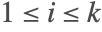 , if
, if  is the domain of integers,
  ; otherwise,
 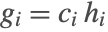 for some invertible element
  of
of  .
.
Proof: If  , then
  is reducible modulo
  or
or  is reducible modulo
  . Hence the leading monomials of the elements of a Gröbner basis are all different. Without loss of generality, assume
  . For induction, fix
  and suppose that for all
  ,
, 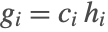 for some invertible element
  of
of  . If
. If  is the domain of integers,
  . Without loss of generality, assume
  . Since
  belongs to
  , there exists
  such that
  divides
  . Then
  , and so
  . If
. If  , then
  would be reducible modulo
  and also modulo
 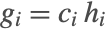 , which is impossible, since
  is semi-reduced. Hence
  , and
, and  , and
, and  divides
  . Similarly,
  divides
  . Therefore, there exists an invertible element
  of
of  , such that
  . If
. If  is the domain of integers,
  and
and  are positive, and so
  . Let
. Let 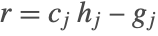 . Suppose
  . Since
  belongs to
  ,
,  must be divisible by
  , for some
  . Let
. Let  and
and  be the coefficients at
  in
in  and
and  . If
. If  is a field, the term
  of
of  is reducible modulo
  , which contradicts the assumption that
  is semi-reduced. If
  is the domain of univariate polynomials over a field,

and so either  is reducible modulo
  , or
, or  is reducible modulo
 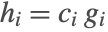 , which contradicts the assumption that
  and
and  are semi-reduced. Finally, let
  be the domain of integers. Since neither
  is reducible modulo
  nor
nor  is reducible modulo
  ,
,  and
and  . Hence
  , which is impossible, since
  is divisible by
  . Therefore
  , and so
 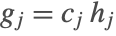 . By induction on
  , for all
  ,
, 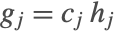 . If
. If  , then
  would be reducible modulo some
  , with
  , and hence
  would be reducible modulo
 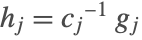 . Therefore
  , which completes the proof of Property 2.
Property 3: Let  be an ideal in
 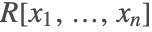 , let
, let  , and let
  be a Gröbner basis of the ideal
  in
in  . Then
  belongs to the radical of
  iff
iff  for an invertible element
  of
of  .
.
If an ideal contains invertible elements of  , GroebnerBasis always returns
  .
.

belongs to the ideal  for any non‐negative integer
  . Hence, if
  belongs to the radical of
  , then 1 belongs to
  . Since
  is a Gröbner basis of
  , it must contain an element
  whose leading coefficient divides 1. Hence
  is an invertible element of
  . Since
  is semi-reduced and
  divides any term,
  . Now suppose that
  for an invertible element
  of
of  . Then 1 belongs to
  , and so

where each  belongs to
  , and each
  belongs to
 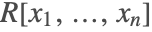 . Hence comparing coefficients at powers of
  leads to the following equations modulo
  :
:  ,
, 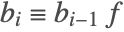 , for
, for 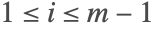 , and
, and  . Then,
  , for
, for 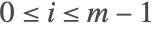 , and
, and  modulo
  . Therefore,
  belongs to the radical of
  , which completes the proof of Property 3.
The following more technical property is important for solving complex polynomial systems.
Property 4: Let  be a Gröbner basis of an ideal
  in
in  with a monomial order that makes monomials containing
  greater than monomials not containing
  , let
, let  be the element of
  with the lowest positive degree
  in
in  , let
, let 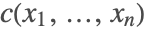 be the leading coefficient of
  in
in  , and let
 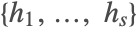 be all elements of
  that do not depend on
  . Then for any polynomial
  and any point
 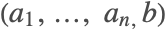 if
if  ,
,  , for
, for 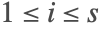 , and
, and  , then
  .
.
Proof: Consider the pseudoremainder  of the division of
  by
by  as polynomials in
  .
.

Since  and
and  belong to
  , so does
  . By Property 1, reduction of
  by
by  must yield zero. Since the degree of
  in
in  is less than
  ,
,  cannot be reduced by any of the elements of
  that depend on
  . Hence

and so  . Since
  , (1) implies that
  , which completes the proof of Property 4.
Wolfram Language Function GroebnerBasis
The Wolfram Language function GroebnerBasis finds semi-reduced Gröbner bases. This section describes GroebnerBasis options used in the solving of complex polynomial systems.
option name | default value | |
| CoefficientDomain | Automatic | the type of objects assumed to be coefficients |
| Method | Automatic | the method used to compute the basis |
| MonomialOrder | Lexicographic | the criterion used for ordering monomials |
GroebnerBasis options used in the solving of complex polynomial systems.
CoefficientDomain
This option specifies the domain  of coefficients. With the default Automatic setting, the coefficient domain is the field generated by numeric coefficients present in the input.
| Integers | the domain of integers |
| InexactNumbers[prec] | inexact numbers with precision prec |
| Polynomials[x] | the domain of polynomials in  |
| RationalFunctions | the field of rational functions in variables not on the variable list given to GroebnerBasis |
| Rationals | the field of rational numbers |
Available settings for CoefficientDomain.
Note that the coefficient domain  also depends on the setting of the Modulus option of GroebnerBasis. With Modulus->p, for a prime number
  , the coefficient domain is the field
  , or the field of rational functions over
  if CoefficientDomain->RationalFunctions.
Method
With the default setting Method->Automatic, GroebnerBasis normally uses a variant of the Buchberger algorithm. Another algorithm available is the Gröbner walk, which computes a Gröbner basis in an easier monomial order and then transforms it to the required harder monomial order. This is often faster than directly computing a Gröbner basis in the required order, especially if the input polynomials are known to be a Gröbner basis for the easier order. With the Method->Automatic setting, GroebnerBasis uses the Gröbner walk for the default CoefficientDomain->Rationals and MonomialOrder->Lexicographic.
| GroebnerBasis[polys,vars,Method->{"GroebnerWalk","InitialMonomialOrder"->order1},MonomialOrder->order2] | |
| find a Gröbner basis in order1 and use the Gröbner walk algorithm to transform it to a Gröbner basis in order2 | |
Transforming Gröbner bases using the Gröbner walk algorithm.
MonomialOrder
This option specifies the monomial order. The value can be either one of the named monomial orders or a weight matrix. The following table gives conditions for  .
.



Quantifier elimination needs an order in which monomials containing quantifier variables are greater than monomials not containing quantifier variables. The Lexicographic order satisfies this condition, but the following EliminationOrder usually leads to faster computations.

where  denotes total degree,
  denotes free variables,
  denotes quantifier variables,
  and
and  are monomials, and
  denotes the DegreeReverseLexicographic order.
Using EliminationOrder requires the GroebnerBasis syntax with elimination variables specified.
| GroebnerBasis[polys,xvars,yvars,MonomialOrder->EliminationOrder] | |
| find a Gröbner basis in EliminationOrder | |
Gröbner basis in elimination order.
By default, GroebnerBasis with MonomialOrder->EliminationOrder drops the polynomials that contain  from the result, returning only basis polynomials in
  . To get all basis polynomials, the value of the system option EliminateFromGroebnerBasis from the GroebnerBasisOptions group must be changed. (The Wolfram Language changes the option locally in the quantifier elimination algorithm.) The option value can be changed with
SetSystemOptions["GroebnerBasisOptions"->{"EliminateFromGroebnerBasis"->False}].
option name | default value | |
| "EliminateFromGroebnerBasis" | True | whether GroebnerBasis with MonomialOrder->EliminationOrder should remove polynomials containing elimination variables |
System option EliminateFromGroebnerBasis.
 from
from  . The answer is a polynomial whose zeros are the Zariski closure of the projection of the solution set of the two original equations on the
  plane:
GroebnerBasis[{Subsuperscript[x, 1, 2] + Subsuperscript[x, 2, 2] - Subscript[x, 1]Subscript[x, 2]y - 1, Subsuperscript[x, 1, 2] + Subsuperscript[x, 2, 2] + Subscript[x, 1]Subscript[x, 2]y + 1}, {Subscript[x, 1], Subscript[x, 2]}, {y}, MonomialOrder -> EliminationOrder] plane depends on all basis polynomials. Note that the second basis polynomial cannot be zero if
  or
or  is zero:
SetSystemOptions["GroebnerBasisOptions" -> {"EliminateFromGroebnerBasis" -> False}];
GroebnerBasis[{Subsuperscript[x, 1, 2] + Subsuperscript[x, 2, 2] - Subscript[x, 1]Subscript[x, 2]y - 1, Subsuperscript[x, 1, 2] + Subsuperscript[x, 2, 2] + Subscript[x, 1]Subscript[x, 2]y + 1}, {Subscript[x, 1], Subscript[x, 2]}, {y}, MonomialOrder -> EliminationOrder]SetSystemOptions["GroebnerBasisOptions" -> {"EliminateFromGroebnerBasis" -> True}];
Resolve[Subscript[∃, y](Subsuperscript[x, 1, 2] + Subsuperscript[x, 2, 2] - Subscript[x, 1]Subscript[x, 2]y == 1∧Subsuperscript[x, 1, 2] + Subsuperscript[x, 2, 2] + Subscript[x, 1]Subscript[x, 2]y + 1 == 0)]Decision Problems
A decision problem is a system with all variables existentially quantified, that is, a system of the form

where 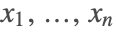 are all variables in
  . Solving a decision problem means deciding whether it is equivalent to True or to False, that is, deciding whether the quantifier-free system of polynomial equations and inequations
 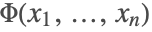 has solutions.
Reduce[Subscript[∃, {a, b, c, x, y}](a x^2 + b x + c == 0 && a y^2 + b y + c == 0 && x ≠ y && b^2 - 4 a c == 0 && a ≠ 0)]
solving any decision problem can be reduced to solving a finite number of decision problems of the form

By Hilbert's Nullstellensatz and Property 3 of Gröbner bases


with an arbitrary monomial order, is different than {1}.

GroebnerBasis[{x^2 + y^2 - 2, x - y, 1 - (x + 1) z}, {x, y, z}]
GroebnerBasis[{x^2 + y^2 - 2, x - y, 1 - (x^2 - 1) z}, {x, y, z}]When the Wolfram Language solves a decision problem, the monomial order used by the GroebnerBasis computation is MonomialOrder->EliminationOrder, with {z} specified as the elimination variable list. This setting corresponds to the monomial ordering in which monomials containing z are greater than those that do not contain z, and the ordering of monomials not containing z is degree reverse lexicographic. If there is no inequation condition, there is no need to introduce z, and the Wolfram Language uses MonomialOrder->DegreeReverseLexicographic.
Quantifier Elimination
For any complex polynomial system there exists an equivalent quantifier-free complex polynomial system. This follows from Chevalley's theorem, which states that a projection of a quasi-algebraically constructible set (a solution set of a quantifier-free system of polynomial equations and inequations) is a quasi-algebraically constructible set [3]. Quantifier elimination is the procedure of finding a quantifier-free complex polynomial system equivalent to a given complex polynomial system. In the Wolfram Language, quantifier elimination for complex polynomial systems is done by Resolve. It is also used by Reduce and FindInstance as the first step in solving or finding instances of solutions of complex polynomial systems.
Resolve[Subscript[∃, {x, y}](a x^2 + b x + c == 0 && a y^2 + b y + c == 0 && x ≠ y)]For complex polynomial systems the Wolfram Language uses the following quantifier elimination method. Given the identities
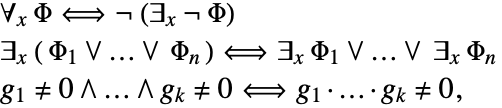
eliminating quantifiers from any complex polynomial system can be reduced to a finite number of single existential quantifier eliminations from systems of the form

To eliminate the quantifier from (1), the Wolfram Language first computes the Gröbner basis of equations

with a monomial order that makes monomials containing  greater than monomials not containing
  .
.
The monomial order used is EliminationOrder, with  specified as the elimination variable list and all basis polynomials kept.
If  contains no polynomials that depend on
  , then a quantifier-free system equivalent to (1) can be obtained by equating all elements of
  to zero, and asserting that at least one coefficient of
  as a polynomial in
  is not equal to zero. Otherwise let
  be the element of
  with the lowest positive degree
  in
in  , let
, let 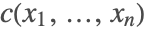 be the leading coefficient of
  in
in  , and let
 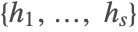 be all elements of
  that do not depend on
  . Now (1) can be split into a disjunction of two systems


To eliminate the quantifier from (2), the quantifier elimination procedure is called recursively. Since the ideal generated by  strictly contains the ideal generated by
 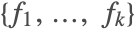 , the Noetherian property of polynomial rings guarantees finiteness of the recursion.
If  belongs to the radical of the ideal generated by
 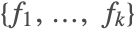 , which is exactly when 1 belongs to

(3) is equivalent to False. Otherwise let

be the pseudoremainder of the division of  by
by  as polynomials in
  . Then (3) is equivalent to the quantifier-free system

To show that (3) implies (4), suppose that 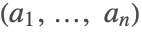 satisfies (3). Then
  and there exists
  , such that

Since 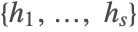 and
and  belong to the ideal generated by
 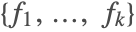 ,
,




To show that (4) implies (3), suppose that 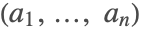 satisfies (4). Then

Since  is a polynomial of degree
  , and
, and  is a nonzero polynomial of degree less than
  , there is a root
  of
of  such that
  divides
  but not
  for some
 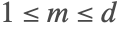 . If
. If  were zero, then
  would divide
  , which is impossible because it would imply that
  divides
  . Therefore
  . Property 4 shows that
  for any polynomial
  . Since
  is a Gröbner basis of the ideal generated by
 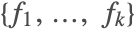 ,
,

which completes the proof of correctness of the quantifier elimination algorithm.
 . Here
  ,
,  , and
, and  . Since
  is a nonzero constant, (2) is False and the equivalent quantifier-free system is given by (4). Since
  is a nonzero constant, (4) becomes
  :
:SetSystemOptions["GroebnerBasisOptions" -> {"EliminateFromGroebnerBasis" -> False}];
GroebnerBasis[{Subsuperscript[x, 1, 2] + Subsuperscript[x, 2, 2] + y^2 - 1, Subscript[x, 1] + Subscript[x, 2] - y}, {Subscript[x, 1], Subscript[x, 2]}, {y}, MonomialOrder -> EliminationOrder]SetSystemOptions["GroebnerBasisOptions" -> {"EliminateFromGroebnerBasis" -> True}];Arbitrary Complex Polynomial Systems
FindInstance
FindInstance can handle arbitrary complex polynomial systems giving instances of complex solutions, or an empty list for systems that have no solutions. If the number of instances requested is more than one, the instances are randomly generated from the full solution of the system given by Reduce. If one instance is requested, a faster algorithm that produces one instance is used. Here is a description of the algorithm used to find a single instance, or prove that a system has no solutions.
If the system contains general quantifiers ( ), the quantifier elimination algorithm is used to eliminate the innermost quantifiers until the system contains only existential quantifiers (
 ) or is quantifier-free. Note that

has solutions if and only if  has solutions, and if
  is a solution of
  , then
 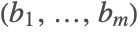 is a solution of (1). Hence to find instances of solutions of systems containing only existential quantifiers it is enough to be able to find instances of quantifier-free systems. Moreover,
 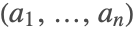 is a solution of

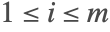
if and only if it is a solution of one of the 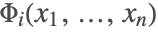 , with
  , so it is enough to show how to find instances of solutions of

First compute the GroebnerBasis  of
of  with MonomialOrder->EliminationOrder, eliminating the polynomials that depend on
  (if there is no inequation condition,
  is the GroebnerBasis of
 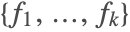 with MonomialOrder->DegreeReverseLexicographic). If
  contains 1, there are no solutions. Otherwise, compute a subset
  of
of 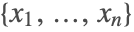 of the highest cardinality among subsets strongly independent modulo the ideal generated by
  with respect to the degree reverse lexicographic order ([1], Section 9.3). Reorder
 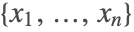 so that
  , and compute the lexicographic order GroebnerBasis
  of the ideal generated by
  . To compute
  , the Wolfram Language uses the Gröbner walk algorithm.
For each of the variables  ,
, 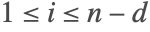 , select the polynomial
  with the smallest leading monomial among elements of
  that depend on
  and not on
 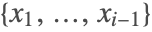 . Let
. Let  be the leading coefficient of
  as a polynomial in
  . If
. If  depends on a variable that is not in
  , replace
  with the lexicographic order Gröbner basis of the ideal generated by
  and
and  . The following shows that this operation keeps
  strongly independent modulo the ideal generated by
  . Hence, possibly after a finite (by the Noetherian property of polynomial rings) number of extensions of
  , the leading coefficient
  of
of  depends only on
  , for all
 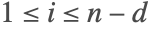 . For the set of polynomials
  , let
, let  be the set of common zeros of elements of
  . Both
  and
and  have dimension
  , and
, and  , hence any
  -dimensional irreducible component of
  is also a component of
  . Since
  does not vanish on any irreducible component of
  , it does not vanish on any
  -dimensional irreducible component of
  . Therefore, the Gröbner basis of
  and
and  contains a polynomial
  depending only on
  . Let
. Let  . To find a solution of (2), pick its last
  coordinates
  so that
  . For all
 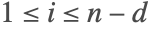 ,
,  , and so by Property 4 if
  , for
, for  , is chosen to be the first root of
  , then
  . Moreover,
  , because otherwise
 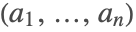 would belong to
 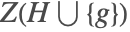 , which would imply that
  , which is impossible since
  divides
  .
.
To prove the correctness of the aforementioned algorithm, it must be shown that extending  by
by  that depend on a variable not in
  preserves strong independence of
  modulo the ideal generated by
  . Suppose for some
 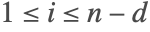 ,
,  depends on a variable, which is not in
  . Let
. Let  denote the ideal generated by
  , and let
  denote the ideal generated by
  and
and  . Then
  does not contain nonzero elements of
  . To prove this, suppose that
  where
where  and
and  . Then
 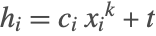 , with
  , and
, and

belongs to the ideal generated by  , and so does
 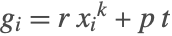 . This contradicts the choice of
  since the leading monomial of
  depends on
  and is strictly smaller than the leading monomial of
  . Therefore, the projection of
  on
on  is dense in
  , and so, since
  has dimension
  ,
,  must be zero on some irreducible component
  of
of  whose projection on
  is dense in
  . Since
  is the Zariski closure of the projection of the
  -dimensional set
  ,
,  is contained in the Zariski closure of the projection of an irreducible component
  of
of  .
.  has dimension
  , hence
  is zero on
  , and the projection of
  on
on  is dense in
  , which proves that
  is strongly independent modulo the ideal generated by
  and
and  .
.
 needs to be extended. Here
  ,
,  ,
, 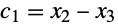 , and
, and  .
.  is zero on one of the two one-dimensional components of
  :
:GroebnerBasis[{(Subscript[x, 2] - Subscript[x, 3])^2 (Subscript[x, 2] - 2 Subscript[x, 3]), (Subscript[x, 2] - Subscript[x, 3]) Subscript[x, 1], Subsuperscript[x, 1, 2] - Subscript[x, 1]}, {Subscript[x, 1], Subscript[x, 2], Subscript[x, 3]}] by
by  results in all
  depending on
  only (in fact even constant) while preserving the strong independence of
  :
:GroebnerBasis[{Subsuperscript[x, 2, 3] - 4 Subsuperscript[x, 2, 2] Subscript[x, 3] + 5 Subscript[x, 2] Subsuperscript[x, 3, 2] - 2 Subsuperscript[x, 3, 3], Subscript[x, 1] Subscript[x, 2] - Subscript[x, 1] Subscript[x, 3], -Subscript[x, 1] + Subsuperscript[x, 1, 2], Subscript[x, 2] - Subscript[x, 3] }, {Subscript[x, 1], Subscript[x, 2], Subscript[x, 3]}]Reduce
Reduce can solve arbitrary complex polynomial systems. As the first step, Reduce uses the quantifier elimination algorithm to eliminate the quantifiers. If the obtained quantifier-free system is a disjunction, each term of the disjunction is solved separately, and the solution is given as a disjunction of the solutions of the terms. Thus, the problem is reduced to solving quantifier-free systems of the form

First compute the GroebnerBasis  of
of  with variable order
  and MonomialOrder->Lexicographic, and select the polynomials that do not depend on
  . Then the solution set of
  is equal to the solution set of (3) and
  does not vanish on any component of the zero set
  of
of  . If
. If  contains 1, (3) has no solutions. Otherwise for each
 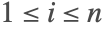 , such that the set
  of elements of
  depending on
  and not on any
  with
with  is not empty, select an element
  of
of  with the lowest positive degree in
  . If one of the leading coefficients
  of
of  is zero on
  , that is, it belongs to the radical of the ideal generated by
  , replace
  by the lexicographic Gröbner basis of the ideal generated by
  and
and  . Now split the system into

and call the solving procedure recursively on all but the last term of the disjunction (4). Note that the algebraic set 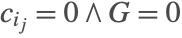 is strictly contained in
  , so the recursion is finite. If the product of all the
  and
and  belongs to the radical of the ideal generated by
  , the last term has no solutions. Otherwise, by Property 4, the solution set of the last term is equal to

The conditions  guarantee that all the solutions (represented as radicals or Root objects) given by Roots[hij0,xij] are well defined. Reduce performs several operations in order to simplify the inequation conditions returned, like removing multiple factors, removing factors common with earlier inequation conditions, reducing modulo the
  , and removing factors that are nonzero on
  .
.
Options
Options for Reduce, Resolve, and FindInstance
The Wolfram Language functions for solving complex polynomial systems have a number of options that control the way they operate. This section gives a summary of these options.
option name | default value | |
| Backsubstitution | False | whether the solutions given by Reduce and Resolve with specified variables should be unwound by backsubstitution |
| Cubics | False | whether the Cardano formulas should be used to express solutions of cubics |
| Quartics | False | whether the Cardano formulas should be used to express solutions of quartics |
Options of Reduce and Resolve affecting the behavior of complex polynomial systems.
option name | default value | |
| WorkingPrecision | ∞ | the working precision to be used in computations, with the default settings of system options; the value of working precision affects only calls to Roots |
Options of Reduce, Resolve, and FindInstance affecting the behavior of complex polynomial systems.
Backsubstitution
Reduce[x^2 + y^2 == 1 && x^5 - 3 x + 7 == 0, {x, y}]Reduce[x^2 + y^2 == 1 && x^5 - 3 x + 7 == 0, {x, y}, Backsubstitution -> True]Cubics and Quartics
Reduce[x^3 - 3 x + 7 == 0, x]Reduce[x^3 - 3 x + 7 == 0, x, Cubics -> True]WorkingPrecision
Reduce[x ^ 2 + y ^ 2 == 1 && x ^ 3 - y ^ 3 == 2, {x, y}, WorkingPrecision -> 20]The ReduceOptions Group of System Options
Here are the system options from the ReduceOptions group that may affect the behavior of Reduce, Resolve, and FindInstance for complex polynomial systems. The options can be set with
SetSystemOptions["ReduceOptions"->{"option name"->value}].
SetSystemOptions["ReduceOptions" -> {"FinitePrecisionGB" -> True}];"FinitePrecisionGB" /. ("ReduceOptions" /. SystemOptions[])SetSystemOptions["ReduceOptions" -> {"FinitePrecisionGB" -> False}];option name | default value | |
| "AlgebraicNumberOutput" | True | whether Reduce should output AlgebraicNumber objects instead of polynomials in one Root object |
| "FinitePrecisionGB" | False | whether finite values of working precision should be used in calls to GroebnerBasis |
| "ReorderVariables" | Automatic | whether Reduce, Resolve, and Solve are allowed to reorder the specified variables |
| "UseNestedRoots" | Automatic | whether Root objects representing algebraic numbers defined by triangular systems of equations can be used in the output |
ReduceOptions group options that affect the behavior of Reduce, Resolve, and FindInstance for complex polynomial systems.
AlgebraicNumberOutput
For systems with equational constraints generating a zero-dimensional ideal  , the Wolfram Language uses a variant of the CAD algorithm that finds projection polynomials using Gröbner basis methods. If the lexicographic order Gröbner basis of
  contains linear polynomials with constant coefficients in every variable but the last one (which is true "generically"), then all coordinates of a solution are polynomials in one algebraic number, namely the last coordinate. The setting of AlgebraicNumberOutput determines whether Reduce represents the solution coordinates as AlgebraicNumber objects in the field generated by the last coordinate.
Reduce[y^3 - 3 y^2 + x^3 + 4 == 0 && y^2 + y - x^2 - 3 x - 11 == 0, {x, y}, Backsubstitution -> True]SetSystemOptions["ReduceOptions" -> "AlgebraicNumberOutput" -> False];
Reduce[y^3 - 3 y^2 + x^3 + 4 == 0 && y^2 + y - x^2 - 3 x - 11 == 0, {x, y}, Backsubstitution -> True]SetSystemOptions["ReduceOptions" -> "AlgebraicNumberOutput" -> True];FinitePrecisionGB
 , if the input is exact GroebnerBasis uses exact computations:
SeedRandom[123];
f = Underoverscript[∑, i = 0, 3]Underoverscript[∑, j = 0, 4]RandomInteger[{-10^100, 10^100}] x^i y^j;g = Underoverscript[∑, i = 0, 4]Underoverscript[∑, j = 0, 3]RandomInteger[{-10^100, 10^100}] x^i y^j;
Timing[Subscript[a, 1] = Reduce[f == 0 && g == 0, {x, y}, WorkingPrecision -> 200, Backsubstitution -> True];]SetSystemOptions["ReduceOptions" -> {"FinitePrecisionGB" -> True}];
Timing[Subscript[a, 2] = Reduce[f == 0 && g == 0, {x, y}, WorkingPrecision -> 200, Backsubstitution -> True];]Precision /@ {Subscript[a, 1], Subscript[a, 2]}Sort[{x, y} /. {ToRules[Subscript[a, 1]]}] - Sort[{x, y} /. {ToRules[Subscript[a, 2]]}]SetSystemOptions["ReduceOptions" -> {"FinitePrecisionGB" -> False}];ReorderVariables
Reduce[z^3 + 3 z - 2 y + 1 == x && z^2 - 7 == y, {x, y, z}]SetSystemOptions["ReduceOptions" -> {"ReorderVariables" -> True}];Reduce[z^3 + 3 z - 2 y + 1 == x && z^2 - 7 == y, {x, y, z}]SetSystemOptions["ReduceOptions" -> {"ReorderVariables" -> Automatic}]; first and express
  in terms of the solution for
  :
:Solve[x == y^3 + 7 y - 1 && y^5 - y == 2, {x, y}]SetSystemOptions["ReduceOptions" -> "ReorderVariables" -> False];
Solve[x == y^3 + 7 y - 1 && y^5 - y == 2, {x, y}]SetSystemOptions["ReduceOptions" -> "ReorderVariables" -> Automatic];UseNestedRoots
FindInstance[x^5 + 2x + 1 == 0 && y^5 + 3 x^2 y + 1 == 0, {x, y}]SetSystemOptions["ReduceOptions" -> "UseNestedRoots" -> False];
FindInstance[x^5 + 2x + 1 == 0 && y^5 + 3 x^2 y + 1 == 0, {x, y}]SetSystemOptions["ReduceOptions" -> "UseNestedRoots" -> Automatic];
FindInstance[x^5 + 2x + 1 == 0 && y^5 + 3 x^4 y + 1 == 0 && z^5 + 3 y^4 z + 1 == 0, {x, y, z}]//TimingSetSystemOptions["ReduceOptions" -> "UseNestedRoots" -> False];
FindInstance[x^5 + 2x + 1 == 0 && y^5 + 3 x^4 y + 1 == 0 && z^5 + 3 y^4 z + 1 == 0, {x, y, z}]//TimingSetSystemOptions["ReduceOptions" -> "UseNestedRoots" -> True];
Solve[x^3 + x y^2 - x - 1 == 0 && y^3 + 3 x^2 y + 1 == 0, {x, y}]SetSystemOptions["ReduceOptions" -> "UseNestedRoots" -> Automatic];
Solve[x^3 + x y^2 - x - 1 == 0 && y^3 + 3 x^2 y + 1 == 0, {x, y}]