
KalmanEstimator
KalmanEstimator[ssm,{w,v}]
constructs the Kalman estimator for the StateSpaceModel ssm with process and measurement noise covariance matrices w and v.
KalmanEstimator[ssm,{w,v,h}]
includes the cross-covariance matrix h.
KalmanEstimator[{ssm,sensors},{…}]
specifies sensors as the noisy measurements of ssm.
KalmanEstimator[{ssm,sensors,dinputs},{…}]
specifies dinputs as the deterministic inputs of ssm.
Details and Options
- The standard state-space model ssm can be given as StateSpaceModel[{a,b,c,d}], where a, b, c, and d represent the state, input, output, and transmission matrices in either a continuous-time or a discrete-time system:
-

continuous-time system 
discrete-time system - The descriptor state-space model ssm can be given as StateSpaceModel[{a,b,c,d,e}] in either continuous time or discrete time:
-

continuous-time system 
discrete-time system - The inputs
 can include the process noise
  as well as deterministic inputs
  .
. - The argument dinputs is a list of integers specifying the positions of
 in
in  .
. - The outputs
 consist of the noisy measurements
  as well as other outputs.
 - The argument sensors is a list of integers specifying the positions of
 in
in  .
. - The arguments sensors and dinputs can also accept values All and None.
- KalmanEstimator[ssm,{…}] is equivalent to KalmanEstimator[{ssm,All,None},{…}].
- The noisy measurements are modeled as
 , where
  and
and  are the submatrices of
  and
and  associated with
  , and
, and  is the noise.
 - The process and measurement noises are assumed to be white and Gaussian:
-
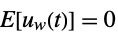 ,
, 
process noise 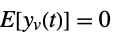 ,
, 
measurement noise - The cross-covariance between the process and measurement noises is given by
 .
. - By default, the cross-covariance matrix
 is assumed to be a zero matrix.
 - KalmanEstimator supports a Method option. The following explicit settings can be given:
-
"CurrentEstimator" constructs the current estimator "PredictionEstimator" constructs the prediction estimator - The current estimate is based on measurements up to the current instant.
- The prediction estimate is based on measurements up to the previous instant.
- For continuous-time systems, the current and prediction estimators are the same, and the estimator dynamics are given by
 .
. - The optimal gain for continuous-time systems is computed as
![l=x_r.c_n.TemplateBox[{r}, Inverse]](Files/KalmanEstimator.en/28.png "l=x_r.c_n.TemplateBox[{r}, Inverse]") , where
, where  solves the continuous algebraic Riccati equation
 ![a.x_r+x_r.a-x_r.c_n.TemplateBox[{r}, Inverse].c_n.x_r+b_w.q.b_w=0](Files/KalmanEstimator.en/30.png "a.x_r+x_r.a-x_r.c_n.TemplateBox[{r}, Inverse].c_n.x_r+b_w.q.b_w=0") .
. - Block diagram for the continuous-time system with estimator:
- The matrices with subscripts
 ,
,  , and
, and  are submatrices associated with the deterministic inputs, stochastic inputs, and noisy measurements, respectively.
 - For discrete-time systems, the prediction estimator dynamics are given by
 . The block diagram of the discrete-time system with prediction estimator is the same as the one above.
 - The estimator dynamics of a current estimator for a discrete-time system are
 , and the current state estimate
  is obtained from the current measurement
  as
as  .
. - The optimal gain of the current estimator for a discrete-time system is computed as
![l_c=(x_r.c_n+b_w.h).TemplateBox[{{(, {{{c, _, n}, ., {x, _, r}, ., {{c, _, n}, }}, +, {{c, _, n}, ., {b, _, w}, ., h}, +, {{h, }, ., {{b, _, w}, }, ., {{c, _, n}, }}, +, v}, )}}, Inverse]](Files/KalmanEstimator.en/40.png "l_c=(x_r.c_n+b_w.h).TemplateBox[{{(, {{{c, _, n}, ., {x, _, r}, ., {{c, _, n}, }}, +, {{c, _, n}, ., {b, _, w}, ., h}, +, {{h, }, ., {{b, _, w}, }, ., {{c, _, n}, }}, +, v}, )}}, Inverse]") , where
, where  solves the discrete algebraic Riccati equation
  .
. - The optimal gain
 of the prediction estimator for a discrete-time system is computed as
  .
. - Block diagram for the discrete-time system with current estimator:
- The inputs to the Kalman estimator model are the deterministic inputs
 and the noisy measurements
  .
. - The outputs of the Kalman estimator model consist of the estimated states
 and estimates of the noisy measurements
  .
. - The optimal estimator is asymptotically stable if
 is nonsingular, the pair
  is detectable, and
  is stabilizable for any
 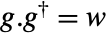 .
.


Examples
open all close allBasic Examples (3)
The Kalman estimator for a continuous-time system:
KalmanEstimator[StateSpaceModel[{{{-1}}, {{1, 0.4}}, {{1}, {-1}}, {{1, 0}, {0, 1}}}, SamplingPeriod -> None,
SystemsModelLabels -> None], {(| | |
| ----- | ----- |
| 0.001 | 0 |
| 0 | 0.001 |), (| | |
| --- | --- |
| 0.1 | 0 |
| 0 | 0.1 |)}]The Kalman estimator of a system with one stochastic output:
KalmanEstimator[{StateSpaceModel[{{{-1}}, {{1, 0.4}}, {{1}, {-1}}, {{1, 0}, {0, 1}}}, SamplingPeriod -> None,
SystemsModelLabels -> None], 1}, {(| | |
| ----- | ----- |
| 0.001 | 0 |
| 0 | 0.001 |), (0.01)}]A discrete‐time Kalman estimator:
KalmanEstimator[StateSpaceModel[{{{-0.5}}, {{1, -1}}, {{1}, {0.5}}, {{1, 0.2}, {0.5, 1.1}}},
SamplingPeriod -> τ, SystemsModelLabels -> None], {(| | |
| - | - |
| 1 | 0 |
| 0 | 1 |), (| | |
| ----- | ----- |
| 0.001 | 0 |
| 0 | 0.001 |)}]Scope (5)
The Kalman estimator for a system with one measured output and one stochastic input:
KalmanEstimator[StateSpaceModel[{{{-2}}, {{0.5}}, {{1}}, {{1}}}, SamplingPeriod -> None, SystemsModelLabels -> None], {(0.0001), (0.01)}]The Kalman estimator of a system with nonzero cross-covariance:
ssm = StateSpaceModel[{{{-3, 1, 0}, {0, -3, 0}, {2, 0, -3}}, {{1, 0, 0}, {0, 1, 0}, {0, 0, 1}},
  {{-1, 1, -3}, {-5, 1, -4}}, {{0, 0, 0}, {0, 0, 0}}}, SamplingPeriod -> None,
SystemsModelLabels -> None];KalmanEstimator[ssm,
{(| | | |
| ------ | ------ | ------ |
| 0.0001 | 0 | 0 |
| 0 | 0.0002 | 0 |
| 0 | 0 | 0.0005 |), (| | |
| ------ | ------ |
| 0.0003 | 0 |
| 0 | 0.0003 |), (| | |
| ------ | - |
| 0.0001 | 0 |
| 0 | 0 |
| 0 | 0 |)}]The estimator for a system with one sensor output and two deterministic inputs:
ssm = StateSpaceModel[{{{-2, 0, 0}, {0, -1, 0}, {0, 0, -3}}, {{1, 0, -1}, {0, 1, 0}, {1, 1, 3}},
  {{1.1, 0.7, -1}, {1, -0.4, 1.6}, {0, -1, 1}}, {{0, 0, 0}, {0, 0, 0}, {0, 0, 0}}},
SamplingPeriod -> None, SystemsModelLabels -> None];KalmanEstimator[{ssm, 1, {1, 2}}, {(10^-6), (10^-4)}]The Kalman estimator for a continuous-time system with cross-correlated noise:
ssm = StateSpaceModel[{{{0, 0, 1, 0}, {0, 0, 0, 1}, {-29.4, 19.6, 0, 0}, {14.7, -14.7, 0, 0}},
  {{0, 1, 0, 0, 0}, {0, 0, 1, 0, 0}, {0, 0, 0, 1, 0}, {0.125, 0, 0, 0, 1}},
  {{1, 0, 0, 0}, {0, 0, 1, 0}}, {{0, 0, 0, 0, 0}, {0, 0, 0, 0, 0}}}, SamplingPeriod -> None,
SystemsModelLabels -> None];KalmanEstimator[{ssm, All, 1}, {(| | | | |
| ---- | ---- | ---- | ---- |
| 10^6 | 0 | 0 | 0 |
| 0 | 10^6 | 0 | 0 |
| 0 | 0 | 10^6 | 0 |
| 0 | 0 | 0 | 10^6 |), (| | |
| - | - |
| 1 | 0 |
| 0 | 1 |), (| | |
| ---- | ---- |
| 1.11 | 1.67 |
| 1.33 | 1.86 |
| 1.58 | 1.82 |
| 1.39 | 1.5 |)}]Find the optimal estimator for a descriptor state-space model:
KalmanEstimator[{StateSpaceModel[{{{-0.3, 0.65, 0}, {0, 0, 1}, {0.25, -0.5, -0.6}},
{{-1, 0}, {0.5, 0}, {0.7, -0.6}}, {{1, 0, 0}, {0, -1, -1}}, {{0, 0}, {0, 0}},
{{3, 0, 0}, {5, 0, 0}, {0, 0, 0}}}, SamplingPeriod -> None, SystemsModelLabels -> None], All, {1}}, {(1), (| | |
| -- | -- |
| 2. | .1 |
| .1 | 5. |)}]Options (2)
Method (2)
By default, the Kalman estimator is based on the current measurements:
ssm = StateSpaceModel[{{{-1}}, {{1, -0.5}}, {{1}, {0.2}}, {{-0.1, 0.6}, {1.2, 2.1}}},
SamplingPeriod -> τ, SystemsModelLabels -> None];{q, r} = {(| | |
| ----- | --- |
| 0.001 | 0 |
| 0 | 0.1 |), (| | |
| ----- | ----- |
| 10^-6 | 0 |
| 0 | 10^-3 |)};KalmanEstimator[ssm, {q, r}]KalmanEstimator[ssm, {q, r}, Method -> "PredictionEstimator"]For continuous-time systems, the current and prediction estimates are equivalent:
Table[KalmanEstimator[StateSpaceModel[{{{-1}}, {{1, -0.5}}, {{1}, {0.2}}, {{-0.1, 0.6}, {1.2, 2.1}}},
SamplingPeriod -> None, SystemsModelLabels -> None], {(| | |
| ----- | --- |
| 0.001 | 0 |
| 0 | 0.1 |), (| | |
| ----- | ----- |
| 10^-6 | 0 |
| 0 | 10^-3 |)}, Method -> m], {m, {"CurrentEstimator", "PredictionEstimator"}}]Equal@@%Applications (2)
Construct a Kalman filter that smooths the response of a stochastic system:

antenna = StateSpaceModel[{{{0.5, 0.07869}, {0, -0.60653}}, {{0.0042, 0.0104}, {0.0786, 0.00786}}, {{1, 0}},
{{0, 0}}}, SamplingPeriod -> 0.1, SystemsModelLabels -> None];{w, v} = {(0.01), (0.001)};kalmanFilter = SystemsModelExtract[KalmanEstimator[{antenna, All, 1}, {w, v}], All, {3}]The response of the system to a sinusoid input in the presence of process and measurement noise:
u = Table[Sin[(2 π i/20.0)], {i, 100}];processNoise = RandomReal[NormalDistribution[0, Sqrt[w[[1, 1]]]], {100}];measurementNoise = RandomReal[NormalDistribution[0, Sqrt[v[[1, 1]]]], {100}];y = Flatten[OutputResponse[antenna, {u, processNoise}]] + measurementNoise;
ListLinePlot[y]
ListLinePlot[OutputResponse[kalmanFilter, {u, y}]]A descriptor system with noise matrices:
ssm = StateSpaceModel[{{{-2, 0.65, 0}, {0, 0, 1}, {0.5, -0.5, -2}}, {{0}, {0}, {-0.6}},
{{1, 0, 0}, {0, -1, 0}}, {{0}, {0}}, {{2, 0, 0}, {1, 1, 0}, {0, 0, 0}}}, SamplingPeriod -> None,
SystemsModelLabels -> None];
{w, v} = {(5), (| | |
| ----- | ----- |
| 1 / 5 | 0 |
| 0 | 1 / 5 |)};Create Gaussian noise sequences:
processNoise = RandomReal[NormalDistribution[0, Sqrt[w[[1, 1]]]], {150}];
measurementNoise = RandomReal[NormalDistribution[0, v[[1, 1]]], {150}];
Interpolate the sequences to get noise signals:
pNoiseSignal = {Interpolation[processNoise][3 t + 1]};
mNoiseSignal = Table[Interpolation[measurementNoise][3 t + 1], {i, 1, 2}];
Find the system output and noisy measurement:
output = OutputResponse[{ssm, {1, 1}}, pNoiseSignal, {t, 0, 30}];
measured = output + mNoiseSignal;
Plot[{output, measured}, {t, 0, 30}, PlotRange -> All]kalmanFilter = SystemsModelExtract[KalmanEstimator[ssm, {w, v}], All, {4, 5}]filtered = OutputResponse[kalmanFilter, measured, {t, 0, 30}];
Plot[filtered, {t, 0, 30}, PlotRange -> All]Compare the actual output, measured output, and filtered output:
{Plot[output, {t, 0, 30}, PlotLabel -> "Actual Output"],
	Plot[measured, {t, 0, 30}, PlotLabel -> "Measured"],
	Plot[filtered, {t, 0, 30}, PlotLabel -> "Filtered"]}
Properties & Relations (2)
KalmanEstimator estimates the states and outputs of a system:
kest = KalmanEstimator[{StateSpaceModel[{{{0, 1}, {-1, 2}}, {{0, 0}, {1, 1}}, {{0.005, 0.005}}, {{0, 0}}},
SamplingPeriod -> 0.1, SystemsModelLabels -> None], All, 1}, {(0.001), (0.1)}]SystemsModelExtract[kest, All, {1, 2}]SystemsModelExtract[kest, All, {3}]Construct a Kalman estimator using StateOutputEstimator :
ssm = StateSpaceModel[{{{0, 0.1}, {-2, 1}}, {{1, 0}, {0, 1}}, {{1, -1}}, {{0, 0}}}, SamplingPeriod -> 1,
SystemsModelLabels -> None];l = LQEstimatorGains[{ssm, All, 1}, {(0.001), (0.1)}];kest = StateOutputEstimator[{ssm, All, 1}, l]Use KalmanEstimator directly:
KalmanEstimator[{ssm, All, 1}, {(0.001), (0.1)}]Text
Wolfram Research (2010), KalmanEstimator, Wolfram Language function, https://reference.wolfram.com/language/ref/KalmanEstimator.html (updated 2012).
CMS
Wolfram Language. 2010. "KalmanEstimator." Wolfram Language & System Documentation Center. Wolfram Research. Last Modified 2012. https://reference.wolfram.com/language/ref/KalmanEstimator.html.
APA
Wolfram Language. (2010). KalmanEstimator. Wolfram Language & System Documentation Center. Retrieved from https://reference.wolfram.com/language/ref/KalmanEstimator.html