
Around
詳細
- Around[x,δ]は,一般に x±δ として表示される.Around[1.2345678,0.0000012]におけるように x に比べて δ が非常に小さい場合は,代りに
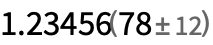
のような形式で表示される. - Around[x,δ]を使って統計的あるいはその他の不確かさを持つ計測結果を表すことができる.
- Around[x,Scaled[ϕ]]は,Around[x,ϕ x]に相当する,相対誤差 ϕ の数を表す.
- Aroundが計算に使われる場合,デフォルトで,不確かさは相関しないものと仮定して一次級数近似を使って伝播される.
- Around[…]["prop"]を使って次の特性が抽出できる.
-
"Value" Around[x,δ]の中央値 x "Uncertainty" Around[x,δ]の不確かさ δ "Number" 値 x と δに対応する確度を持つ数 "Interval" Interval[{x-δ,x+δ}] - Around[s]の不確かさを含む数は以下のように指定できる.
-
x(近似数) Around[x,(10^-Accuracy[x])/2] Interval[{xmin,xmax}] Around[(xmax+xmin)/2,(xmax-xmin)/2] dist(統計分布) Around[Mean[dist],StandardDeviation[dist]] list(要素のリスト) Around[Mean[list],StandardDeviation[list]] "nn.dddd"(数列) (不確かさは有効桁数で決定される) - 線形演算の場合,Around[x,δ]は,値が正規分布NormalDistribution[x,δ]に従って分布している数のように振る舞う.
- Less,Equal,Greater等の関係演算子をAroundオブジェクトのAround[x1,δ1]とAround[x2,δ2]に使うと,中心 x1と x2が2

より大きいか小さいかによってTrueまたはFalseが返される.数値の場合はAroundオブジェクトと比較する際に不確かさ0が割り当てられる. - NumericalOrderは,不確かさを無視して数値Aroundオブジェクトを中心値で順序付けます。
- Around[x,δ]の値 x と不確かさ δ は任意の数式または記号式でよい.δ が数式なら,x と δ は両方とも数値となる.デフォルトで,機械精度が使われるが,数を忠実に表すために必要であれば,より高い精度を使うこともできる.
- Around[x,δ]は1桁または2桁の不確かさ δ で表示される.x は小数点の右側に δ と同じ桁数で表示される.
- Around[x,δ]の x と δ の単位は,互換であれば異なっていてもよい.
- Around[{x1,x2,…},δ] は第1引数のリストに縫い込まれ,事実上,xiの不確かさは相関しないものとして扱われる.
例題
すべて開く すべて閉じる例 (7)
Around[1.3421, 0.012]Around[-1.3421 10 ^ -7, 1.2 10 ^ -8]Around[RandomReal[{-1, 1}], 10 ^ -8]さまざまな単位の不確かなQuantityオブジェクト:
Quantity[Around[140.764, 0.023], "Meters" / "Seconds"]Around[Quantity[23.425, "Meters"], Quantity[13, "Millimeters"]]UnitConvert[%, "Inches"]非対称の不確かさを持つAroundオブジェクト:
Around[56.723, {0.18, 0.076}]Aroundオブジェクトを操作する:
Around[1, .1] + Around[2, .4]Exp[Around[2, .1]]Aroundオブジェクトのリストをプロットする:
ListPlot[{Around[1, .1], Around[2, .2], Around[3, .3]}]Aroundオブジェクトの一部を抽出する:
a = Around[Sqrt[3], 0.012345]a["Value"]a["Uncertainty"]同じAroundオブジェクトの異なる2つの例は相関しないと仮定される:
Around[2, 0.1] + Around[2, 0.1]したがって,結果の不確かさは2倍して得られたものよりも小さい:
2Around[2, 0.1]スコープ (24)
不確かなオブジェクト (9)
Around[52.241, 0.123]Around[Sqrt[17], 0.73]Around[-17 / 2, 1 / 2]Around[21 ^ 21, 19 ^ 19]Around[0, 0.004]Around[23.28, {0.31, 0.72}]Around[-23.28, {0.31, 0.72}]Around[Sqrt[101], {Sqrt[5], Sqrt[7]}]Around[4.1836, Scaled[0.05]]Around[4.1836, Scaled[Quantity[5, "Percent"]]]不確かなQuantityオブジェクト:
Quantity[Around[1.73, 0.21], "Yards"]Around[Quantity[5, "Minutes"], Quantity[7, "Seconds"]]Around[Quantity[100, "Kilometers" / "Hours"], Quantity[2, "Kilometers" / "Hours"]]結果は,Aroundの大きさを持つ単一のQuantityオブジェクトである:
InputForm[%]Around[Quantity[3, "Meters"], {Quantity[5, "Centimeters"], Quantity[2, "Inches"]}]Around[12.7172 10 ^ 7, 3.42]Around[12.7172, 3.42]Around[12.7172 10 ^ -7, 3.42]Around[12.7172, 3.42]Around[12.7172, 3.42 10 ^ -7]Around[12.7172, 3.42 10 ^ 5]Around[3.56, Scaled[0.3]]同じオブジェクトをQuantity百分率を使って表す:
Around[3.56, Scaled[Quantity[30, "Percent"]]]任意次元のQuantityの値を使う:
Around[Quantity[-34.78, "Newtons"], Scaled[0.04]]Around[Quantity[-34.78, "Newtons"], Scaled[Quantity[4, "Percent"]]]記号的なAroundオブジェクトを使う:
a = Around[x, δ]a ^ 2Exp[a]不確かさが相関しないと仮定される,記号的なAroundオブジェクトを加える:
Around[x, Subscript[δ, x]] + Around[y, Subscript[δ, y]]アクセサと変換 (5)
Aroundオブジェクトの値と不確かさを抽出する:
a = Around[-12.4728, 0.0031]a["Value"]a["Uncertainty"]Aroundオブジェクトから有限精度数を作る:
a = Around[-12.4728, 0.0031]number = a["Number"]Accuracy[number](10 ^ -%) / 2有限精度数からもとのAroundオブジェクトを再構築する:
Around[number]Aroundオブジェクトの値を中心とした区間を,その不確かさで与えられた半幅で構築する:
a = Around[-12.4728, 0.0031]interval = a["Interval"]区間からもとのAroundオブジェクトを構築する:
Around[interval]Aroundを使って数を含む文字列を,有効な最終桁の不確かさを0.5と仮定して変換する:
Around["1.23"]Around["1.2300"]Around["-1.23e7"]Around["-1.2300D-7"]Aroundを使って不確かさがある数を含む数列を変換する:
Around["1.23+-0.06"]Around["-1.23±0.06"]Around["1.7861 pm 6.e-3"]Around["1.7861+0.0048-0.0023"]不確かなオブジェクトを使った演算 (4)
Around[1, 0.5] + Around[4, 0.4]Around[1, 0.5] + Around[4, {0.7, 0.4}]Around[1, 0.5]Around[4, 0.4]Around[1, 0.5]Around[4, {0.7, 0.4}]Around[2, 0.1] ^ Around[4, 0.2]Around[2, 0.1] ^ Around[4, {0.7, 0.4}]Quantityオブジェクトの基本演算:
Around[Quantity[1, "Meters"], Quantity[5, "Centimeters"]] + Around[Quantity[3, "Feet"], Quantity[2, "Inches"]]UnitConvert[%, "Inches"]Quantity[Around[10, 1], "Kilometers" / "Hours"]Around[Quantity[2, "Minutes"], Quantity[12, "Seconds"]]要素がAroundオブジェクトであるQuantityArrayオブジェクトを構築する:
QuantityArray[{Quantity[Around[1, 0.1], "Farads"], Quantity[Around[2, 0.2], "Farads"]}]QuantityArray構造を保持したまま操作する:
% ^ 2Normal[%]記号的なAroundオブジェクトの基本演算:
a = Around[x, δ]3aa ^ 4Log[5a]Tanh[a + 1]不確かなオブジェクトの比較と順序づけ (6)
中心が離れた2つのAroundオブジェクトを比較する:
a1 = Around[1.18, 0.24]
a2 = Around[4.3, 0.35]{a1 < a2, a1 <= a2, a1 == a2, a1 >= a2, a1 > a2}a2 - a1中心が近い2つのAroundオブジェクトを比較する:
a1 = Around[3.18, 0.34]
a2 = Around[3.55, 0.52]{a1 < a2, a1 <= a2, a1 == a2, a1 >= a2, a1 > a2}a2 - a1数のAroundオブジェクトを比較する:
a = Around[2.73, 0.12]x = 2{a < x, a <= x, a == x, a >= x, a > x}a - 2Quantityの中心と不確かさを持つAroundオブジェクトを比較する:
a1 = Around[Quantity[4, "Feet"], Quantity[2, "Inches"]]a2 = Around[Quantity[1, "Meters"], Quantity[2, "Centimeters"]]{a1 < a2, a1 <= a2, a1 == a2, a1 >= a2, a1 > a2}a1 - a2//UnitConvertAroundオブジェクトと数の集まりを数値順に並べる:
arounds = Inner[Around, RandomReal[10, 4], RandomReal[2, 4], List]numbers = RandomReal[10, 4]NumericalSort[Join[arounds, numbers]]NumericalSort[{Around[Quantity[4., "Meters"/"Seconds"], Quantity[20., "Centimeters"/"Seconds"]], Quantity[Around[5.3, 0.5], "Kilometers"/"Hours"], Quantity[Around[6.2, 0.4], "Knots"]}]%//UnitConvertアプリケーション (3)
ListPlot[Table[Around[n, RandomReal[3]], {n, 20}]]太陽系外惑星の半径と質量を,両方の変数にある不確かさも入れてプロットする:
rmdata = DeleteMissing[ExoplanetData[EntityClass["Exoplanet", All], {EntityProperty["Exoplanet", "Mass", {"Uncertainty" -> "Around"}], EntityProperty["Exoplanet", "Radius", {"Uncertainty" -> "Around"}]}], 1, 1];Length[rmdata]Take[rmdata, 3]ListPlot[rmdata, ...]meanM = Mean[rmdata[[All, 1]]]meanR = Mean[rmdata[[All, 2]]]meanM / Entity["Planet", "Earth"]["Mass"]meanR / Entity["Planet", "Earth"]["Radius"]長さ
の振り子の振動周期を,地球の引力を
とし,これらの数量の最終有効桁に1単位の不確かさを仮定して計算する:
First@FormulaData[{"PendulumSmallOscillations", "Standard", "Period"}]% /. {l -> Quantity[Around[75, 1], "Centimeters"], g -> Quantity[Around[9.80, 0.01], "Meters" / "Seconds" ^ 2]}特性と関係 (3)
1階級数近似を使ってAroundオブジェクトを二乗する:
Around[10, 1] ^ 2TransformedDistributionを使って対応する厳密計算を行う:
dist = TransformedDistribution[s ^ 2, sNormalDistribution[10, 1]]Around[Mean[dist], StandardDeviation[dist]]高次級数展開を使うと厳密な結果に対するよりよい近似が得られる:
AroundReplace[s ^ 2, s -> Around[10, 1], 2]非対称分布に直接Aroundを使うと,非対称な不確かさがあるオブジェクトが返される:
Around[dist]dist = NormalDistribution[5, 0.3];scalars = RandomVariate[dist, 100];Around[scalars]は分布の平均と標準偏差を推定する:
Around[scalars]Around[dist]は分布 dist における真のパラメータを与える:
Around[dist]MeanAround[scalars]は分布の平均と平均の標準誤差を記述する:
MeanAround[scalars]Around[x,δ]とCenteredInterval[x,δ]は数値演算で異なる伝播規則を使う:
a = Around[12, 1]a ^ 3c = CenteredInterval[12, 1]c ^ 3関連するガイド
-
▪
- 不確かさを含む数 ▪
- 科学的データ解析 ▪
- 単位と数量 ▪
- 天文学の計算とデータ ▪
- 物理学と化学のデータと計算 ▪
- 統計モデル解析 ▪
- データの可視化 ▪
- 科学的モデル ▪
- 確率・統計
テキスト
Wolfram Research (2019), Around, Wolfram言語関数, https://reference.wolfram.com/language/ref/Around.html (2023年に更新).
CMS
Wolfram Language. 2019. "Around." Wolfram Language & System Documentation Center. Wolfram Research. Last Modified 2023. https://reference.wolfram.com/language/ref/Around.html.
APA
Wolfram Language. (2019). Around. Wolfram Language & System Documentation Center. Retrieved from https://reference.wolfram.com/language/ref/Around.html
BibTeX
@misc{reference.wolfram_2026_around, author="Wolfram Research", title="{Around}", year="2023", howpublished="\url{https://reference.wolfram.com/language/ref/Around.html}", note=[Accessed: 15-August-2026]}
BibLaTeX
@online{reference.wolfram_2026_around, organization={Wolfram Research}, title={Around}, year={2023}, url={https://reference.wolfram.com/language/ref/Around.html}, note=[Accessed: 15-August-2026]}