



FormFunction
字段类型列表 »FormFunction[formspec,func]
表示一个激活表单,当它被提交时,对根据 formspec 指定的表单所获得的值应用 func.
FormFunction[{"name1"type1,…},func]
表示一个激活表单,其中名为 namei 的字段被解释为类型 typei.
FormFunction[{{"name1",label1}type1,…},func]
使用 labeli 作为名为 namei 的字段的标签.
FormFunction[{namespec1type1default1,…},func]
使用 defaulti 作为由 namespeci 指定的字段的缺省值.
FormFunction[formspec,func,fmt]
指定在云端应用 func 得到的结果应该以格式 fmt 返回.
FormFunction[{formspec1,formspec2,…},func,…]
表示多页面表单,其中连续的 formspeci 可以是应用于目前得到的数值的函数.
更多信息和选项
- FormFunction[formspec,func] 显示由 formspec 指定的表单,以及一个“提交”按钮.
- 在 FormFunction[formspec,func] 中,formspec 可以是 FormObject[…].
- FormFunction[formspec,func] 求值以给出 FormFunction[FormObject[…],func],其中 FormObject 包含表单中所有字段的完整规范.
- CloudDeploy[FormFunction[…]] 生成一个包含表单激活版本的云对象.
- FormFunction[formspec,func][] 首先运算 Setting[formspec],给出表单中字段值的关联. 如果未生成验证错误,则对关联应用 func,并返回结果.
- 在评价 FormFunction 的效果之前,FormFunction[formspec,func][<"namek"->inputk,…>] 会将给定的输入插入到由 FormFunction 指定的表单.
- FormFunction[…][] 计算为激活表单,在假定给定输入有效的情况下,表单被提交时应用 func 的结果替代.
- 每个字段的 typei 可以是以下任意一种:
-
"form" Interpreter 支持的任意表单 Restricted[…], etc. Interpreter 支持的任意受条件限制的表单等 Interpreter[…] 任意 Interpreter 对象 assoc FormObject 中使用的关联 tfun 应用于字符串的任意函数 - 在由 FormFunction[{formspec1,formspec2,…},…] 表示的多页面表格中,显示由 formspeci 指定的连续多个表格,其中默认情况下最后的表格具有“完成”按钮,而前面的表格具有“下一个”按钮.
- 在 FormFunction[{formspec1,formspec2,…},…] 中,formspec1 后的 formspeci 通常总是纯函数. 它们通过给出从所有前面的 formspeci 得到的所有输入的数值应用于一个关联.
- FormFunction 的总体选项包括:
-
AppearanceRules Automatic 给出总体外观规则的关联 FormLayoutFunction Automatic 生成表单布局的函数 FormProtectionMethod Automatic 防护恶意内容的方法 ImageFormattingWidth $ImageFormattingWidth 输出格式的封装宽度 ImageSize Automatic 输出的整体图像尺寸 PageTheme Automatic 已部署网页的整体主题 - 当在云端被调用时,FormFunction[formspec,func] 默认返回适合网页输出格式的结果.
- FormFunction[formspec,func,fmt] 中的可能结果规范 fmt 有:
-
Automatic 作为尽可能合适的 HTML 或 CloudCDFElement 导出 "HTML" 作为没有动态内容的原始静态 HTML 页面导出 "HTMLThemed" 使用和表单相同的主题作为静态 HTML 导出 "HTMLPaneled" 作为面板中的 HTML 内容导出 "GIF","JPEG","PNG",… 结果的图像 "String" 结果的原始字符串形式 "fmt" ExportForm 支持的任意格式 None 不加改变的传递字符串或字节列表 {None,"type"} 通过所定义的指定 HTTP 响应类型传递 {fmt,opts} 具有选项的格式规范 f 将被应用于 body 的任意函数 - 当在云端被调用时,FormFunction[formspec,func,"fmt"] 等价于 FormFunction[formspec,ExportForm[func[#],"fmt"]&].
- 当在笔记本界面直接调用时,在 FormFunction[formspec,func,fmt] 中的结果规范 fmt 将被忽略.
范例
打开所有单元 关闭所有单元基本范例 (2)
form = FormFunction[{"first" -> "String", "second" -> "Number"}, f]form[]CloudDeploy[form]form[{"first" -> "str", "second" -> "55"}]form[{"first" -> "str"}]FormFunction[{"x" -> "Boolean", "y" -> TemplateIf[TemplateSlot["x"], "Number", "String"]}, foo]范围 (25)
解释器规范 (6)
使用丰富的 Interpreter 规范:
CloudDeploy[FormFunction[{"x" -> Restricted["Integer", {1, 10}]}, func]]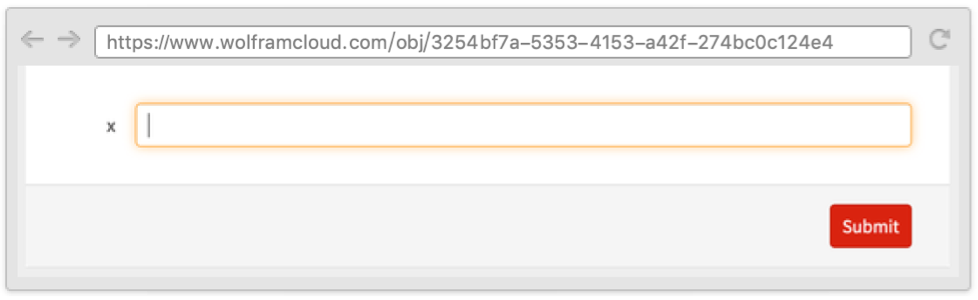
Interpreter 头部是可选的,但是对指定 Interpreter 选项或者其他参数很有用:
CloudDeploy[FormFunction[{"x" -> Interpreter["StructuredDate", TimeZone -> 2], "y" -> Interpreter[ToExpression, Positive]}, func]]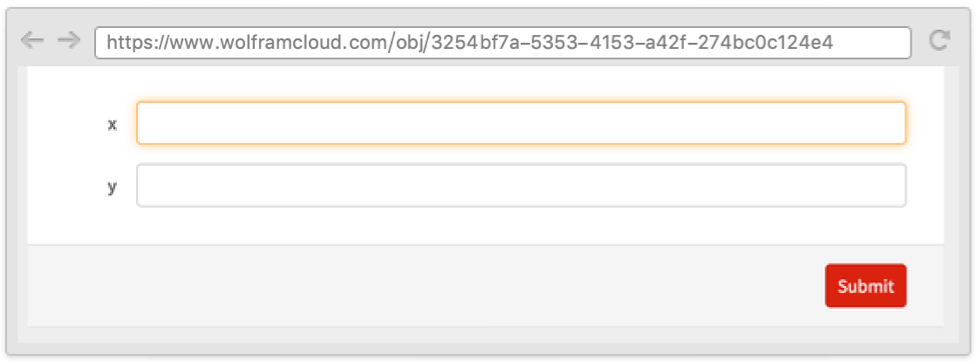
CloudDeploy[FormFunction[{"x" -> {1, 2, 3}}, func]]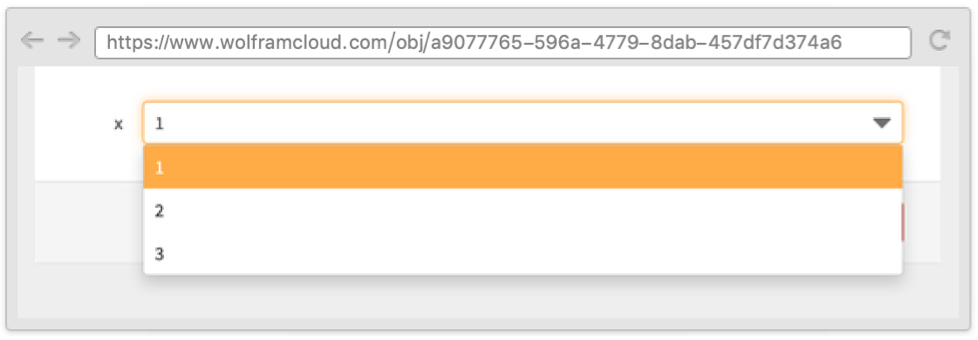
CloudDeploy[FormFunction[{"question" -> {"Yes" -> True, "No" -> False}}, func]]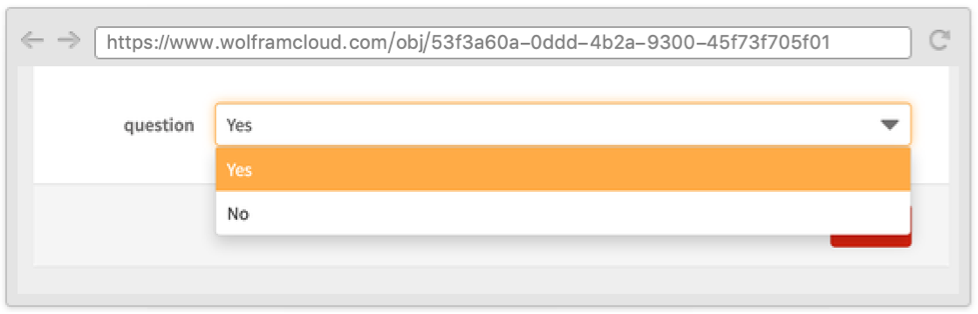
CloudDeploy[FormFunction[{"Country" -> EntityList["Country"]}, func]]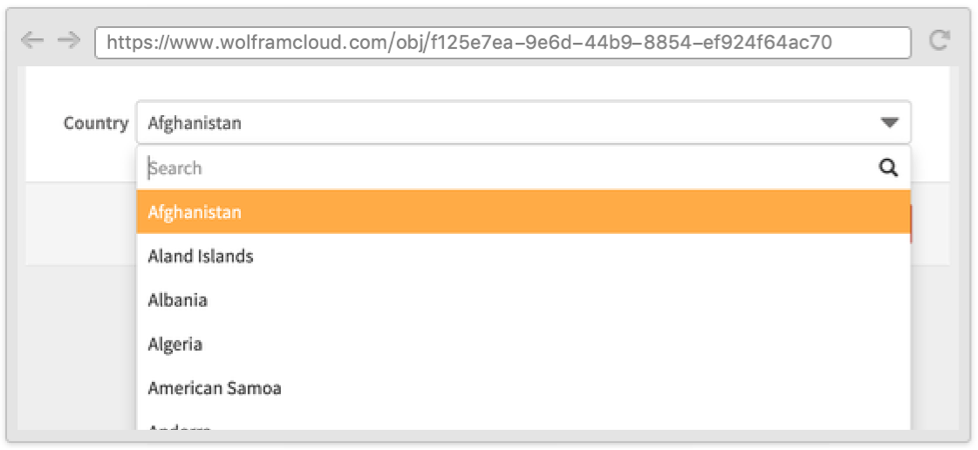
CloudDeploy[FormFunction[{"Image" :> Map[ImageResize[ExampleData[#], {100, 100}] &, ExampleData["TestImage"][[1 ;; 6]]]}, Composition[EdgeDetect, First], "PNG"]]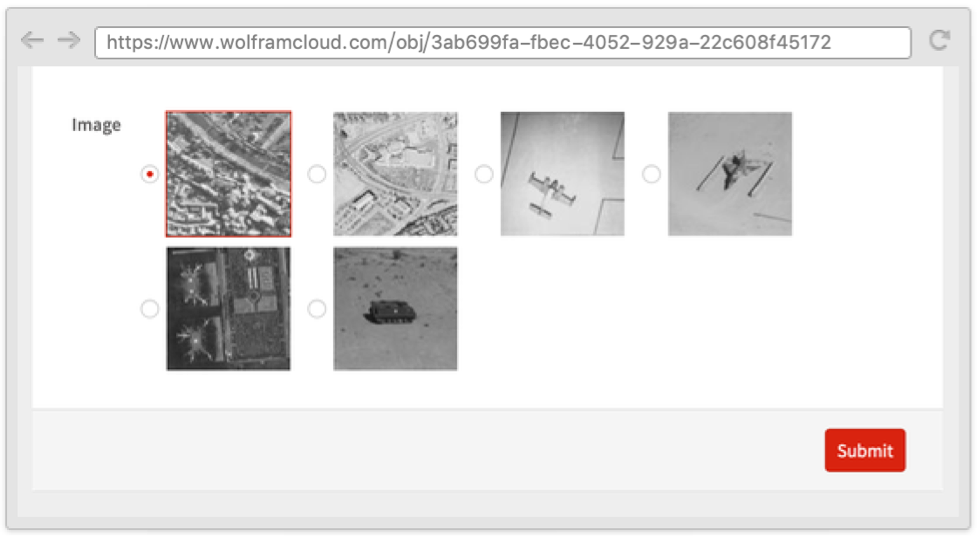
CloudDeploy[FormFunction[{"x" -> {"A" -> 1, "B" -> 2, "C" -> 3}}, func]]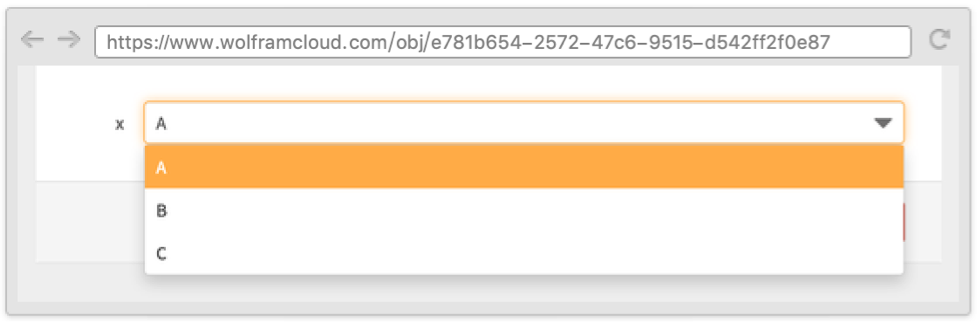
默认值 (3)
FormFunction[{"first" -> "String", "second" -> "Number" -> 3}, f]["first" -> "str"]FormFunction[{"first" -> "String", "second" -> <|"Interpreter" -> "Number", "Required" -> False|>}, f]["first" -> "str"]使用 RuleDelayed 每次计算一个新的默认值:
FormFunction[{"name" -> "String", "date" -> <|"Interpreter" -> "DateTime", "Default" :> DateObject[]|>}, f][<|"name" -> "Bob", "date" -> None|>]输入 (2)
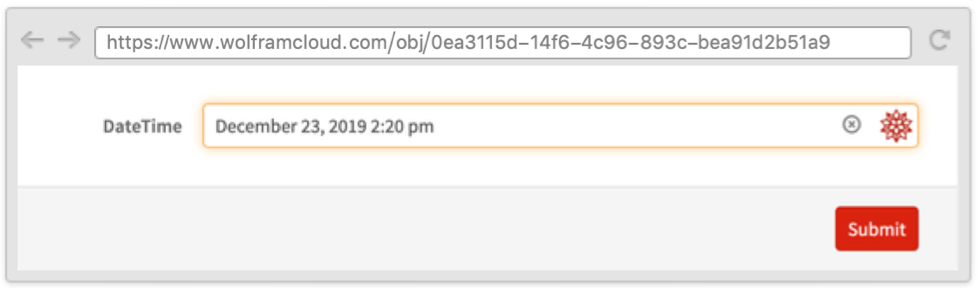
标签 (1)
CloudDeploy[FormFunction[{"x", "First Name"} -> "String", Identity]]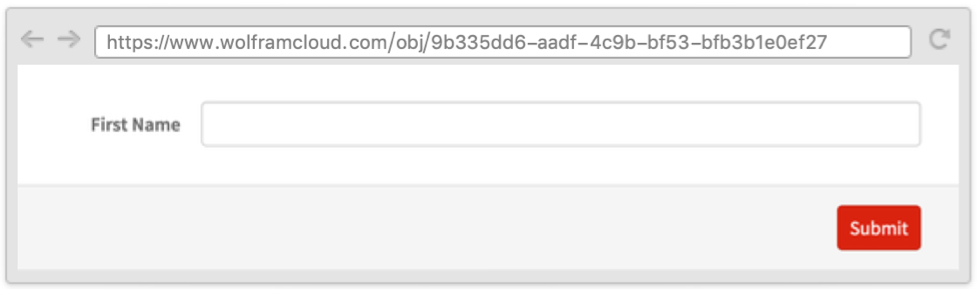
可以使用 RuleDelayed 并且返回任意表达式:
CloudDeploy[FormFunction["pc" -> <|"Label" :> "PC: " <> $MachineID|>, Identity]]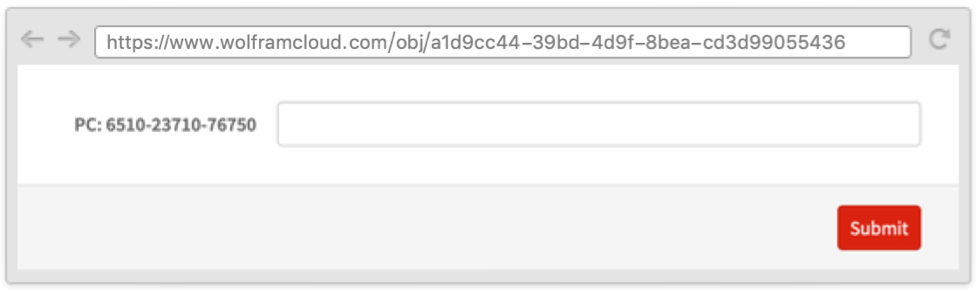
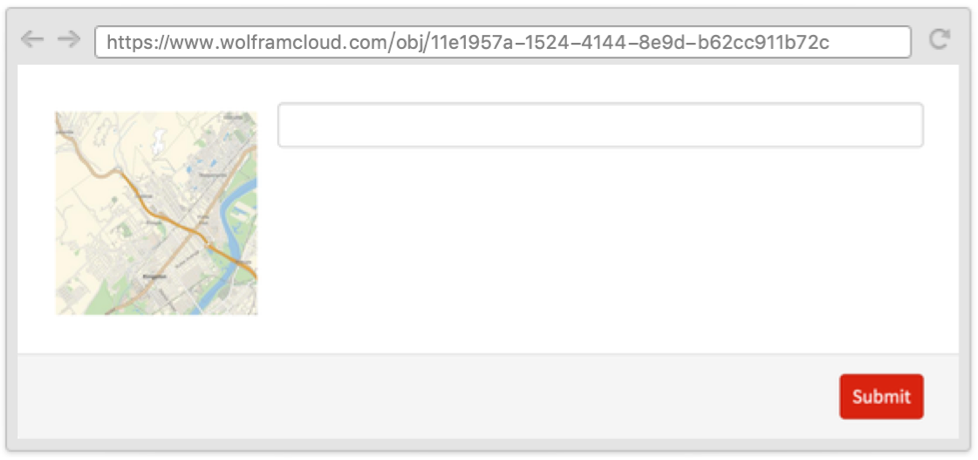
CloudDeploy[FormFunction[
	"pc" -> <|"Label" :> GeoGraphics[
	$GeoLocation,
	GeoRange -> Quantity[2, "Miles"]
	]|>,
	Identity
	]]
使用 None 删除标签:
CloudDeploy[FormFunction["Query" -> <|"Label" -> None, "Hint" -> "Search"|>, Identity]]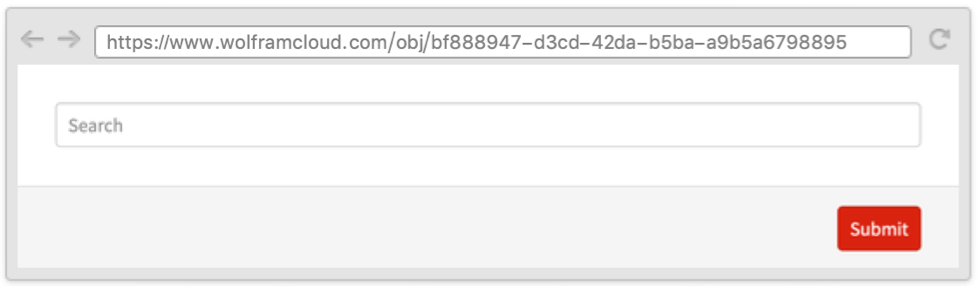
CloudDeploy[FormFunction[{
	"First" -> <|"Label" -> None, "Hint" -> "First Name"|>,
	"Last"  -> <|"Label" -> None, "Hint" -> "Last Name"|>
	}, Identity]]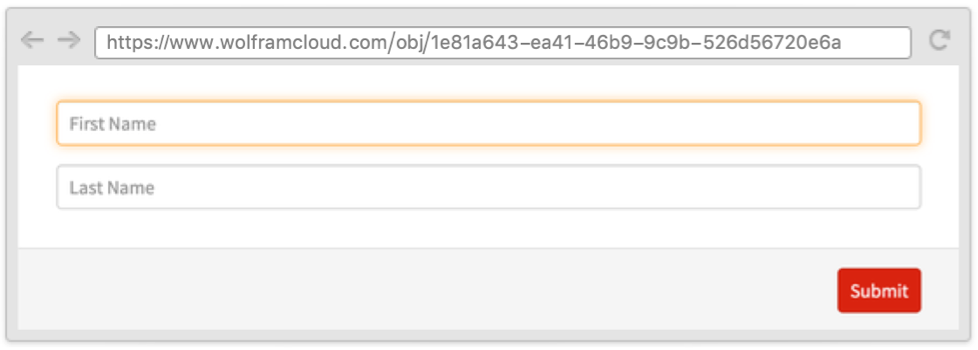
外观 (4)
CloudDeploy[FormFunction[{"key", "Label"} -> "Integer", g]]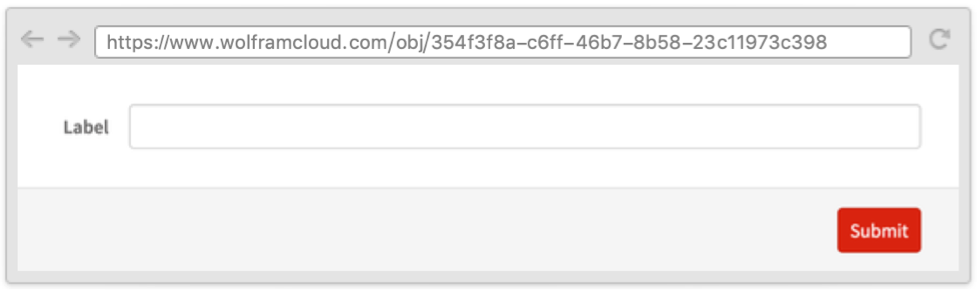
CloudDeploy[FormFunction[{"Number", [image]} -> "Number", g]]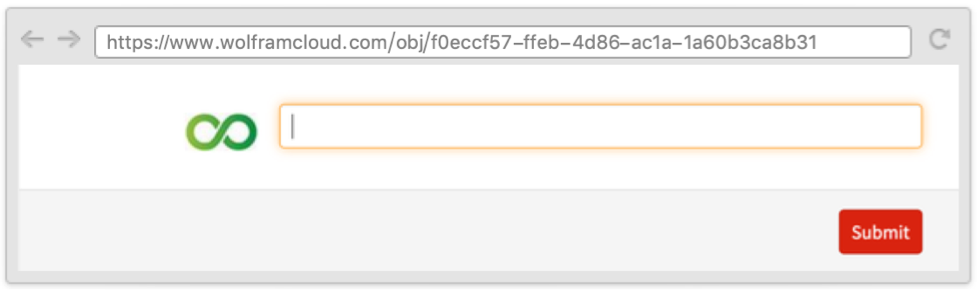
CloudDeploy[FormFunction[{"x" -> <|"Interpreter" -> Restricted["Integer", {1, 10}], "Control" -> InputField, "Help" -> "help text", "Hint" -> "write something"|>}, func]]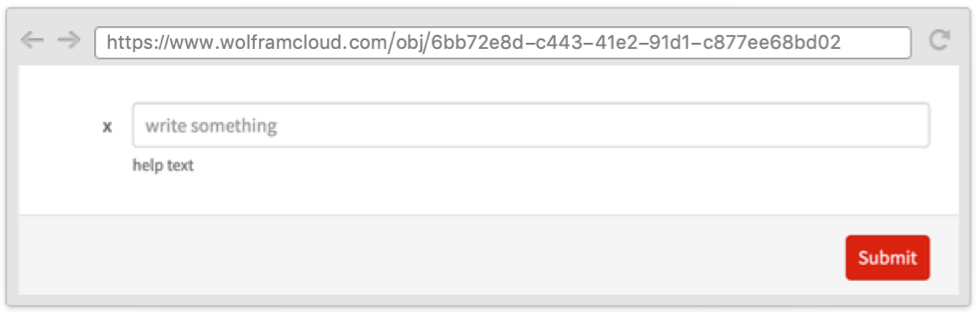
使用 RuleDelayed 计算在云端的表达式:
CloudDeploy[FormFunction[{"x" -> <|"Label" -> "Where are you?", "Help" :> GeoGraphics[$GeoLocation]|>}, func]]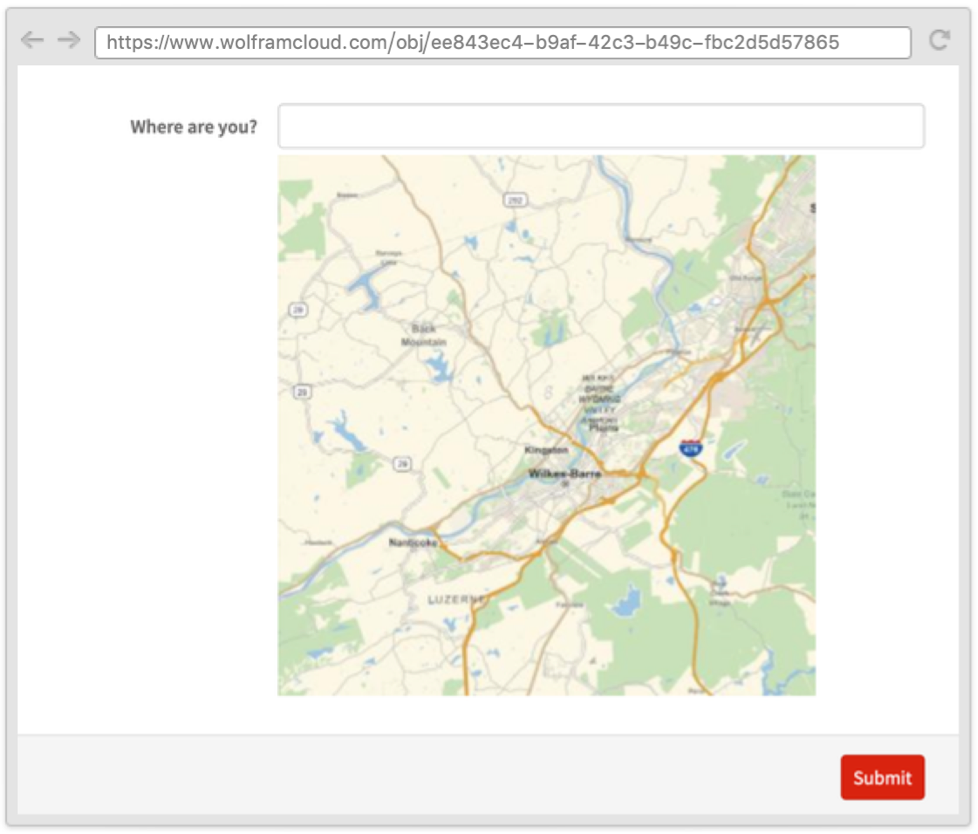
CloudDeploy[FormFunction[{"x" -> "String", "text", Graphics3D[Sphere[]], "y" -> "Integer"}, func]]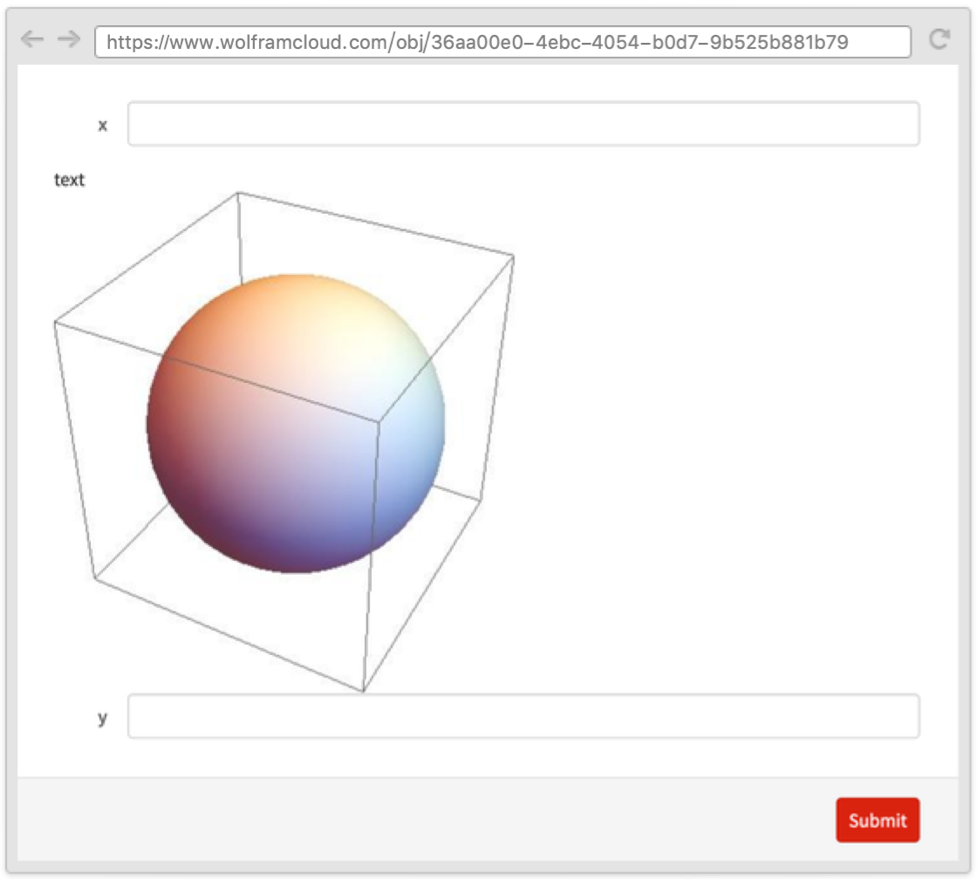
控制 (7)
CloudDeploy[FormFunction[{"x" -> "Color"}, func]]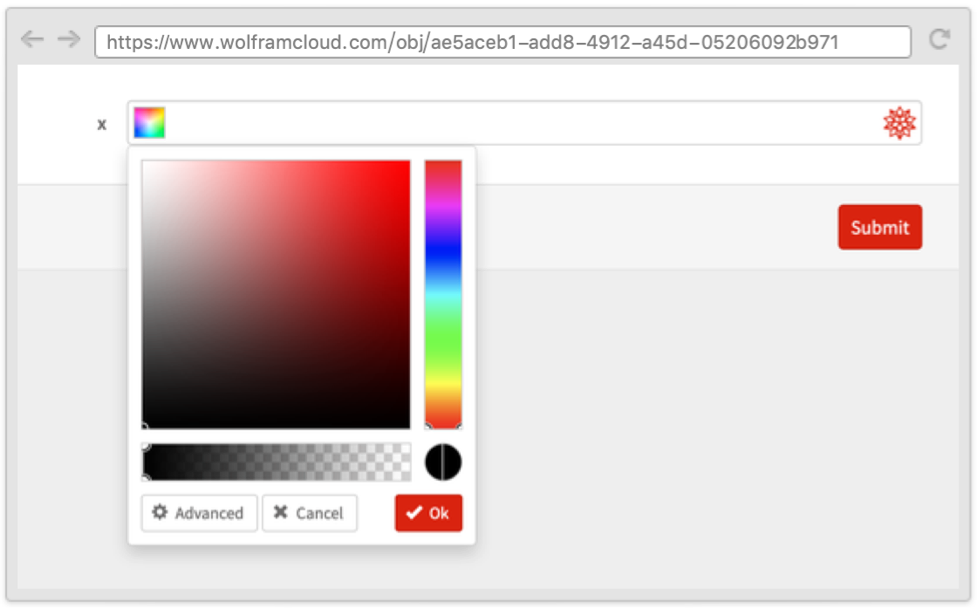
CloudDeploy[FormFunction[{"x" -> "Image"}, func]]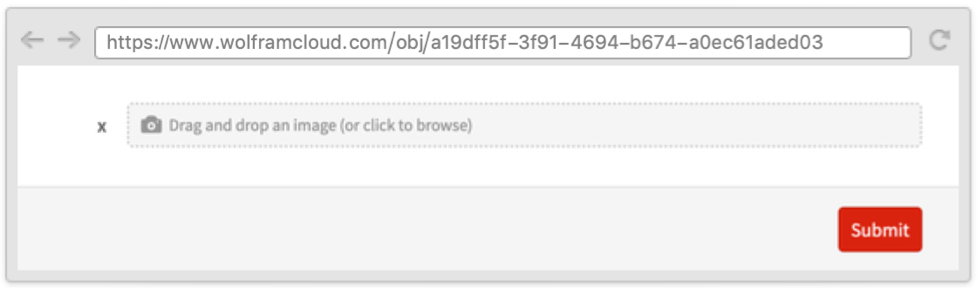
CloudDeploy[FormFunction[{"x" -> "Boolean"}, func]]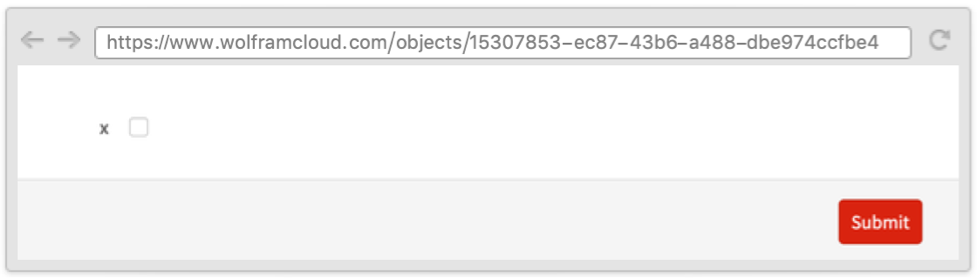
CloudDeploy[FormFunction[{"x" -> <|"Interpreter" -> Restricted["Integer", {1, 10}], "Control" -> Slider|>}, func]]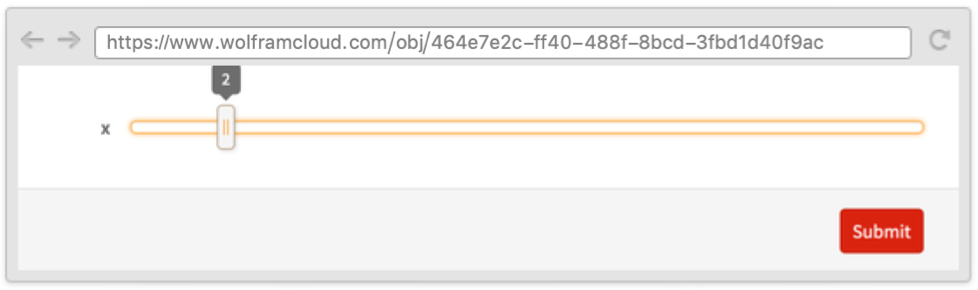
CloudDeploy[FormFunction[FormObject[<|"x" -> <|"Interpreter" -> {"A" -> 1, "B" -> 2, "C" -> 3}, "Control" -> RadioButtonBar|>|>], func]]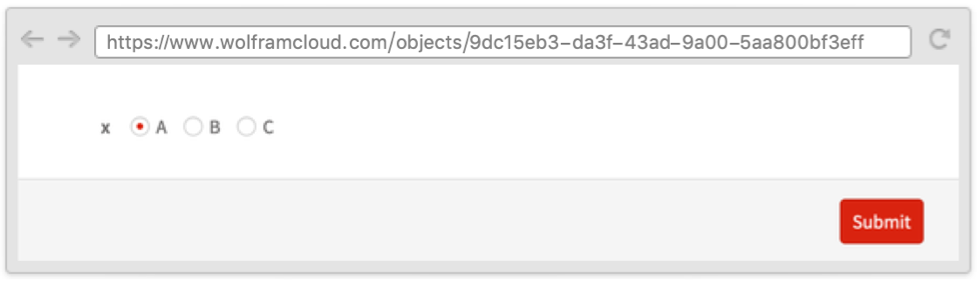
CloudDeploy[FormFunction[FormObject[<|"x" -> <|"Interpreter" -> {Plot[Sin[x], {x, 0, 10}, ImageSize -> Small] -> 1, Graphics3D[Sphere[], ImageSize -> Small] -> 2, EntityValue[Entity["Species", "Species:FelisCatus"], EntityProperty["Species", "Image"]] -> 3}, "Control" -> RadioButtonBar|>|>], func]]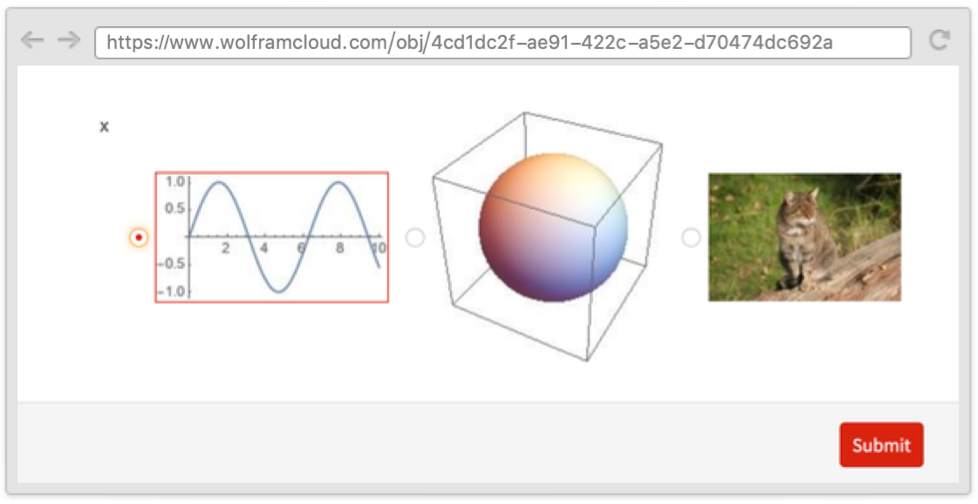
CloudDeploy[FormFunction[{"x" -> <|"Interpreter" -> "String", "Control" -> Function[Tooltip[InputField[##], EntityValue[Entity["Species", "Species:FelisCatus"], EntityProperty["Species", "Image"]]]]|>}, func]]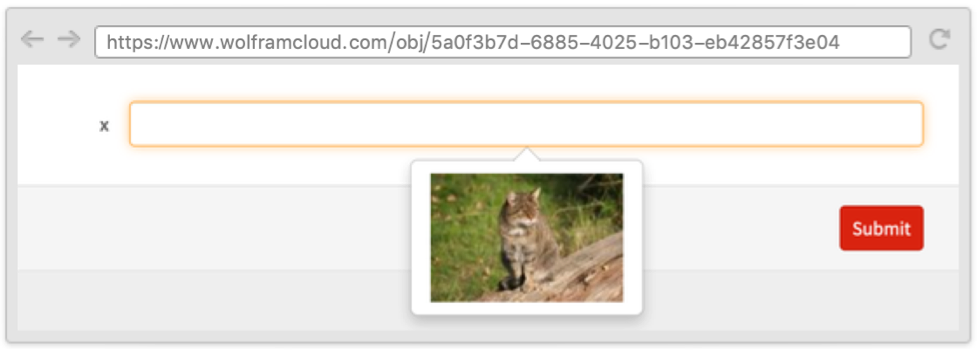
动态表单 (1)
包含 TemplateSlot 的表单的部分不被计算,直到 TemplateSlot[key] 中提到的键被绑定到合适的值:
FormFunction[{{"name", "what's your name?"} -> "GivenName", "gender" -> <|"Interpreter" -> {"Male", "Female"}, "Input" -> TemplateIf[TemplateSlot["name"][[-1, -1]] == "male", "Male", "Female"]|>}][]多页面表单 (1)
FormFunction 支持跨越了几个页面的表单. 信息栏取决于前面页面中的值:
FormFunction[{{{"rooms" , "number of rooms"} -> "Integer"}, Function[Table[{"room" <> ToString[i], "guests in room" <> ToString[i]} -> "Integer", {i, #rooms}]]}][]选项 (6)
AppearanceRules (1)
CloudDeploy[FormFunction["Start" -> "Country", func, AppearanceRules -> <|"Title" -> "Where do you want to go?", "Description" -> "Enter a country and we will find you an accomodation"|>]]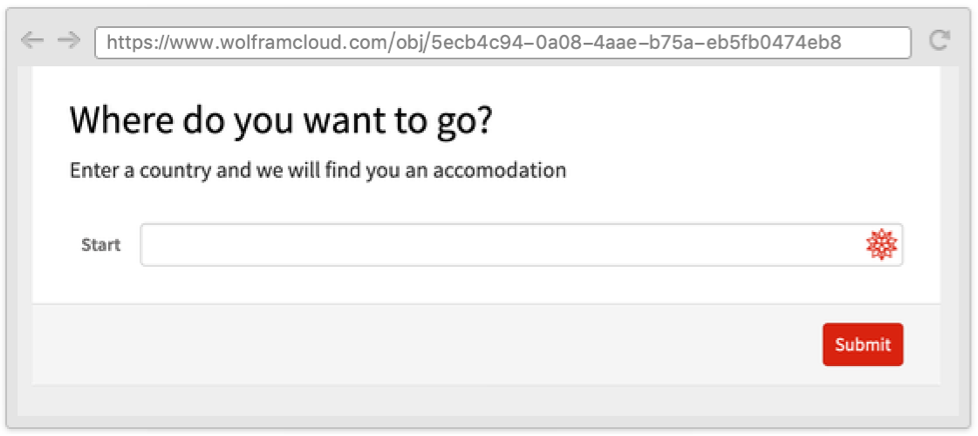
CloudDeploy[FormFunction["Product" -> {"Flyers", "Business cards", "Leflets"}, func, AppearanceRules -> <|"Title" -> [image], "Description" -> "What do you want to print today?"|>]]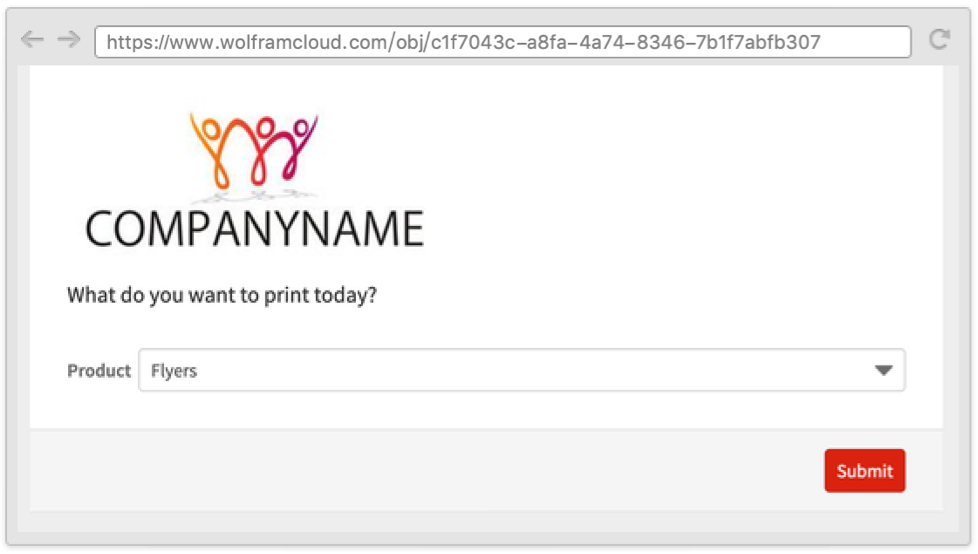
CloudDeploy[FormFunction[{"First" -> "String", "Second" -> "String"}, func, AppearanceRules -> <|"ItemLayout" -> "Vertical"|>]]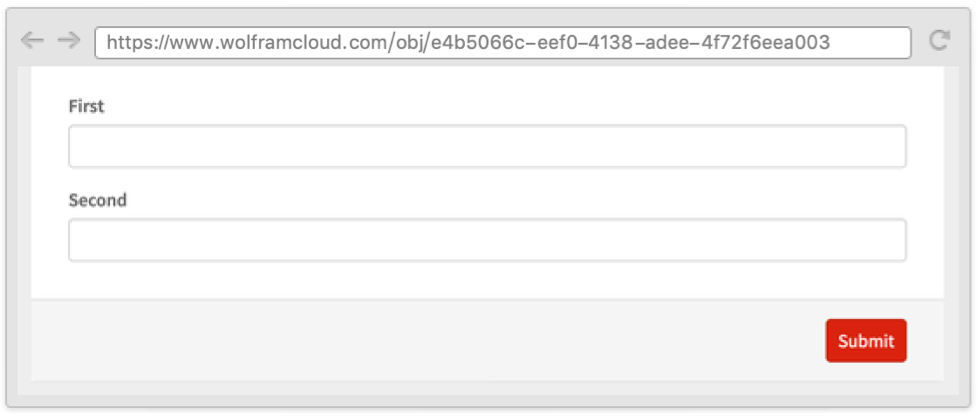
CloudDeploy[FormFunction[{"First" -> <|"Help" -> "Insert a value"|>, "Second" -> <|"Help" -> "Insert a value"|>}, func, AppearanceRules -> <|"ItemLayout" -> "Inline"|>]]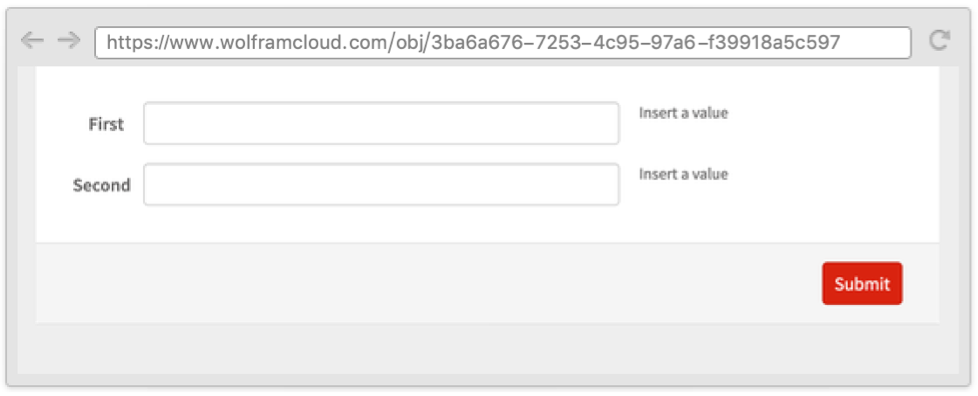
CloudDeploy[FormFunction["Product" -> {"Flyers", "Business cards", "Leflets"}, func, AppearanceRules -> <|"SubmitLabel" -> "Buy now!"|>]]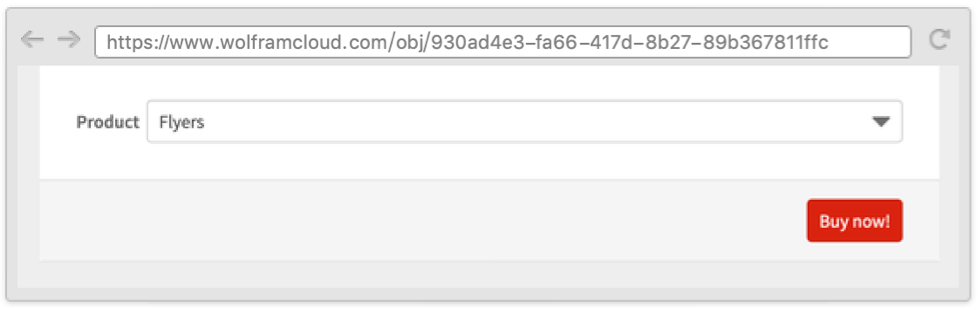
FormLayoutFunction (1)
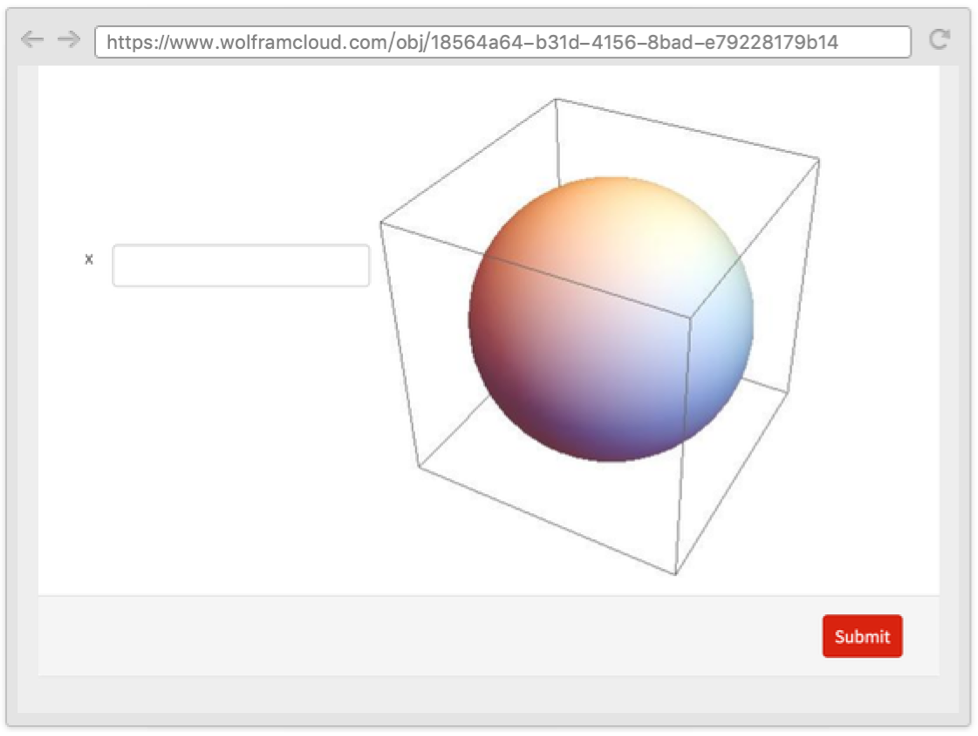
PageTheme (4)
CloudDeploy[FormFunction[{"age" -> "Number"}, First, PageTheme -> "White"]]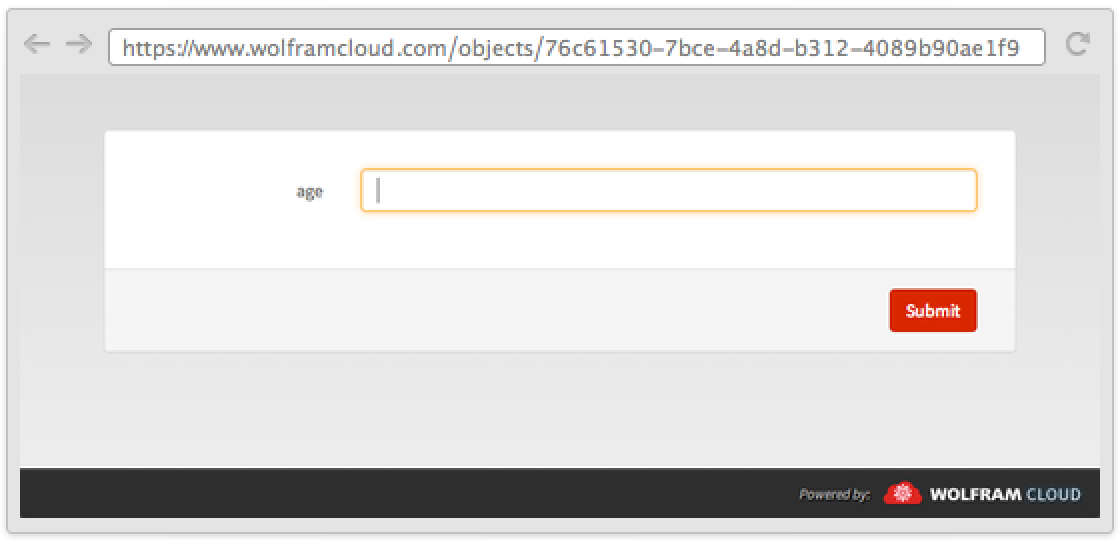
CloudDeploy[FormFunction[{"age" -> "Number"}, First, PageTheme -> "Blue"]]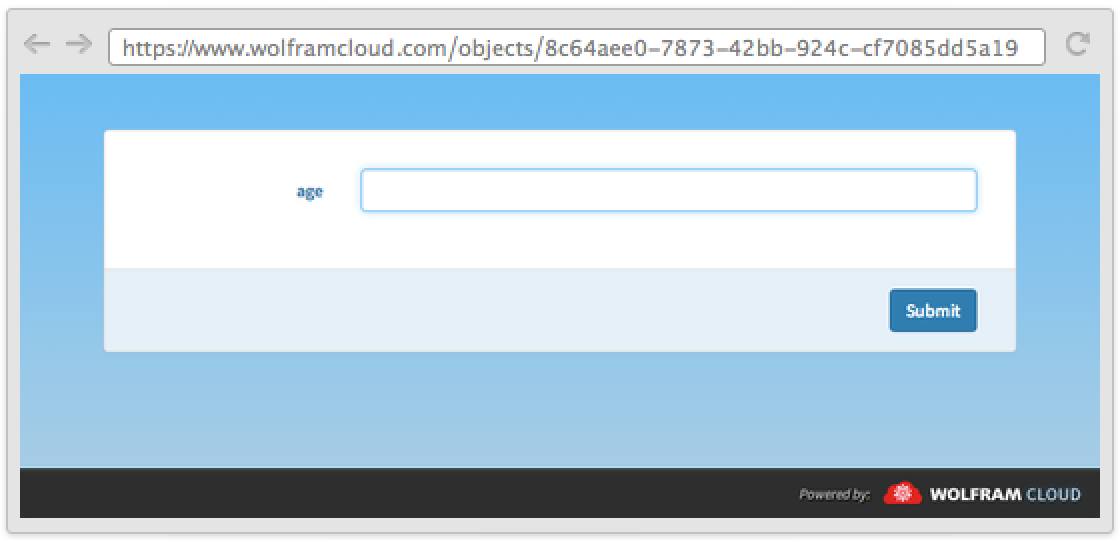
CloudDeploy[FormFunction[{"age" -> "Number"}, First, PageTheme -> "Black"]]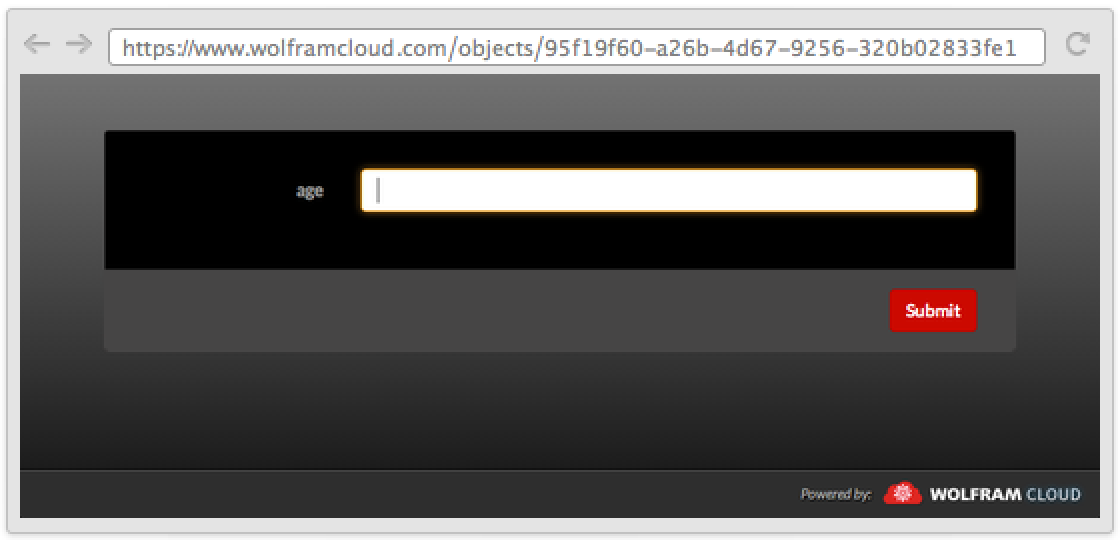
CloudDeploy[FormFunction[{"age" -> "Number"}, First, PageTheme -> "Red"]]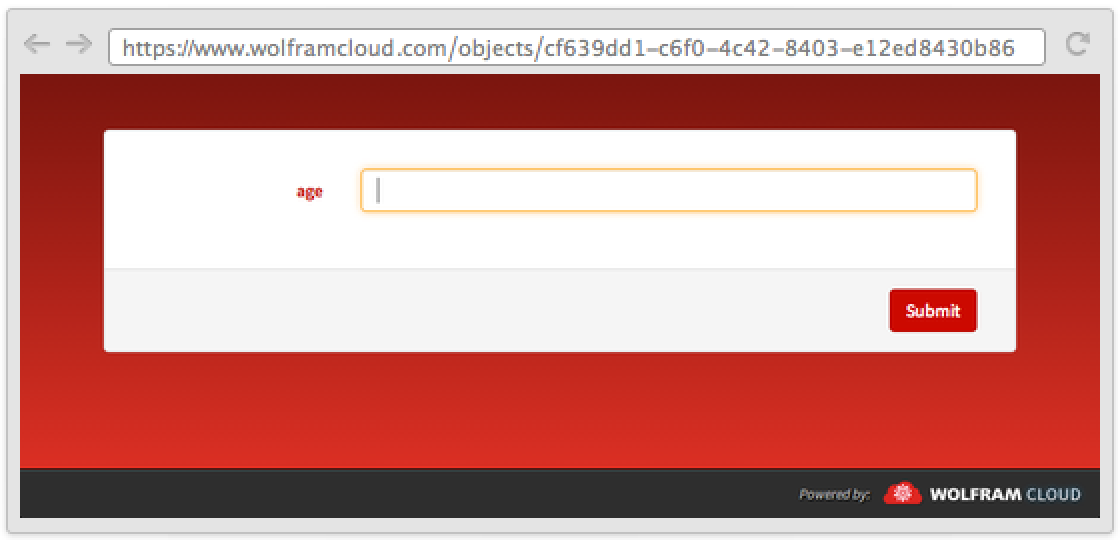
应用 (2)
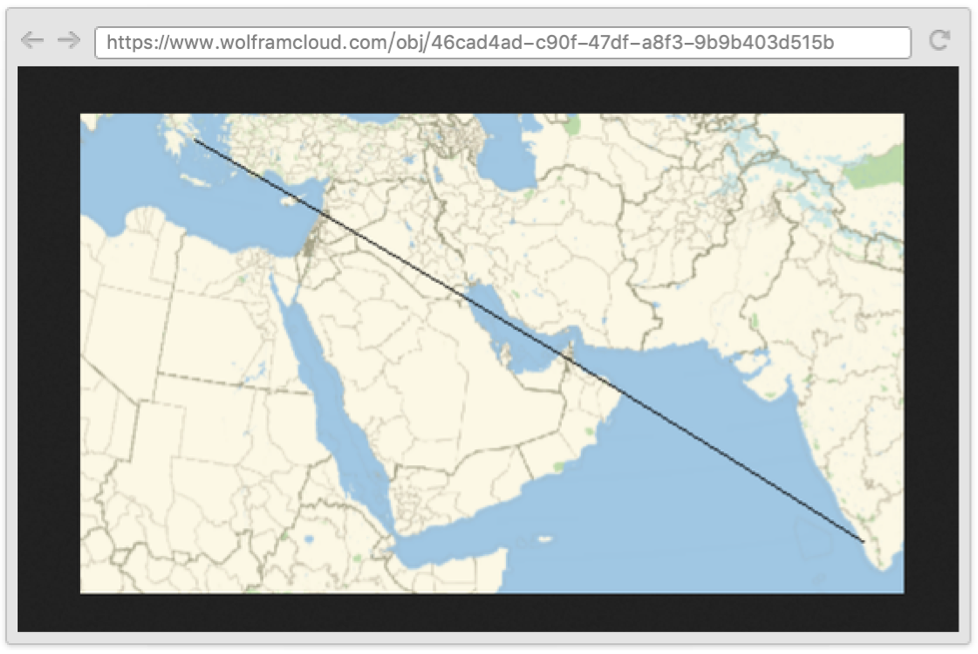
CloudDeploy[FormFunction[{"from" -> "Airport", "to" -> "Airport"}, GeoGraphics[GeoPath[{GeoPosition[#from], GeoPosition[#to]}]]&, "PNG"]]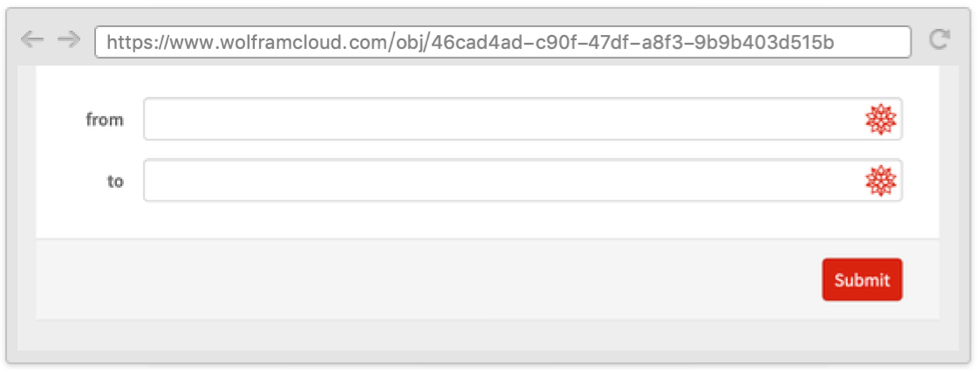
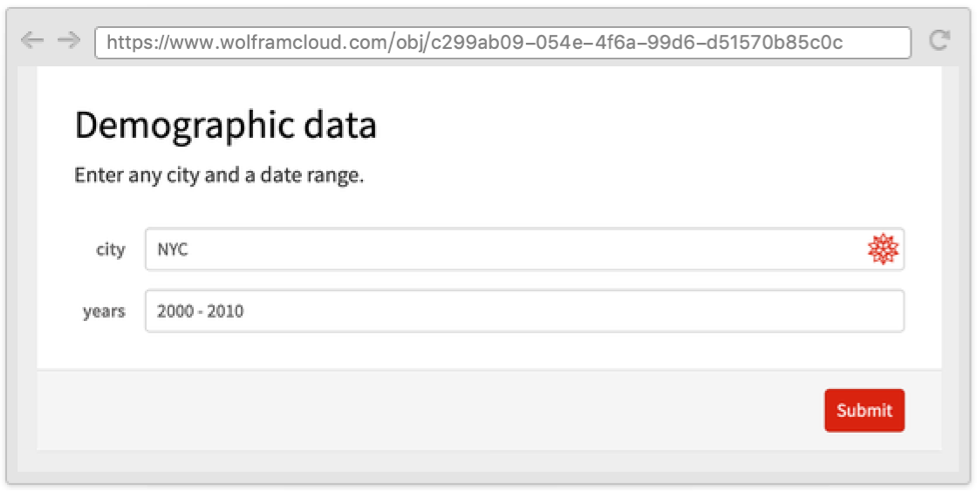
CloudDeploy @ FormFunction[{
	"city" -> <|"Interpreter" -> "City", "Input" -> "NYC"|>,
	"years" -> <|
	"Input" -> "2000 - 2010",
	"Interpreter" -> Restricted[
	DelimitedSequence[
	Restricted["Integer", {1900, 2014}],
	"-"
	],
	{1, 2}
	]|>
	},
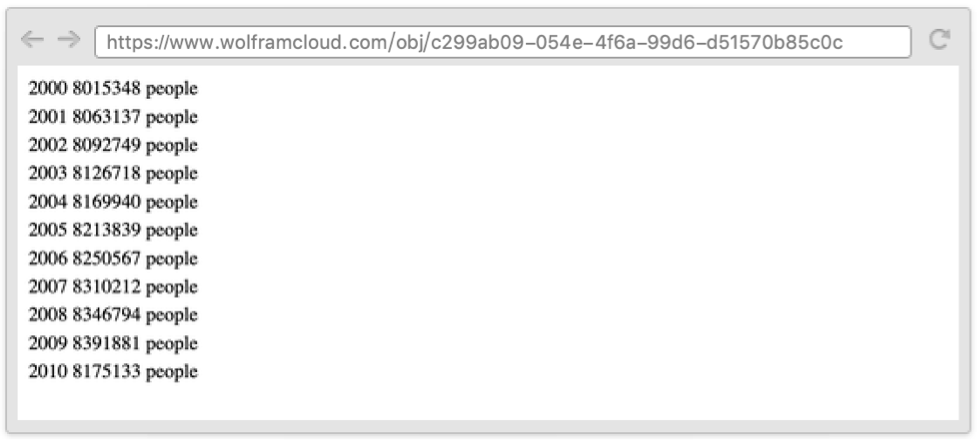
	Module[{data, range},
	range = Range @@ PadRight[Sort[#years], 2, First[#years]];
	data  =   EntityValue[
	#city,
	Table[
	EntityProperty[
	"City",
	"Population",
	{"Date" -> DateObject[{year}]}
	],
	{year, range}
	]
	];
	Grid @ Transpose[{range, data}]
	]
	&,
	"HTML",
	AppearanceRules -> <|
	"Title" -> "Demographic data",
	"Description" -> "Enter any city and a date range."
	|>
	]
属性和关系 (8)
FormFunction 被设计成可以与 APIFunction 交换:
CloudDeploy[FormFunction @@ APIFunction["x" -> "String", Identity]]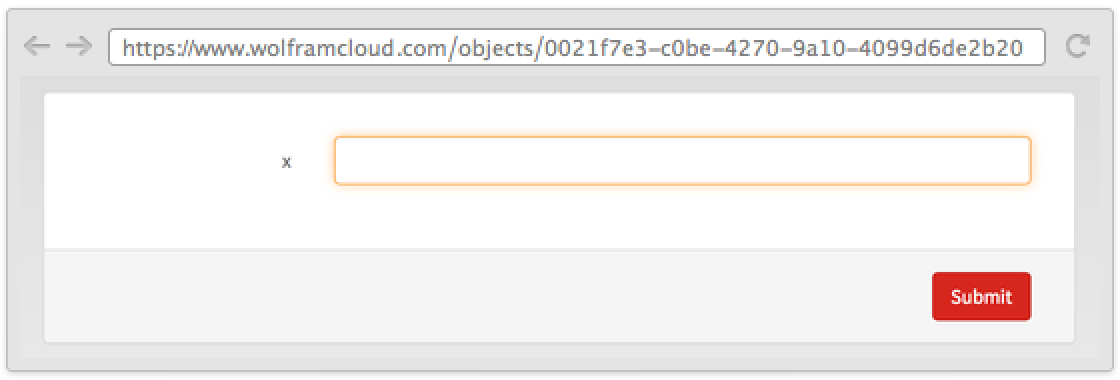
CloudDeploy[APIFunction @@ FormFunction["x" -> "String", Identity]]
FormFunction 的第一个参数可以以完整的 FormObject 给出:
FormFunction[FormObject["x" -> "Integer"], Identity]计算 FormFunction,使得第一个变量变成完整的 FormObject:
FormFunction["x" -> "String", Identity]//InputFormFormFunction 的单个域使用 Interpreter 转换 Wolfram 语言表达式中的输入:
ff1 = FormFunction["x" -> "Country", #x&]ff2 = FormFunction["x" -> Interpreter["Country"], #x&]与直接应用 Interpreter 相同:
ff1["x" -> "france"] === ff2["x" -> "france"] === Interpreter["Country"]["france"]AnySubset 可用于产生一个控件,其中可以挑选多于一个的选项:
CloudDeploy[FormFunction[
	{"choose one or more" -> AnySubset[{1, 2, 3}]}]]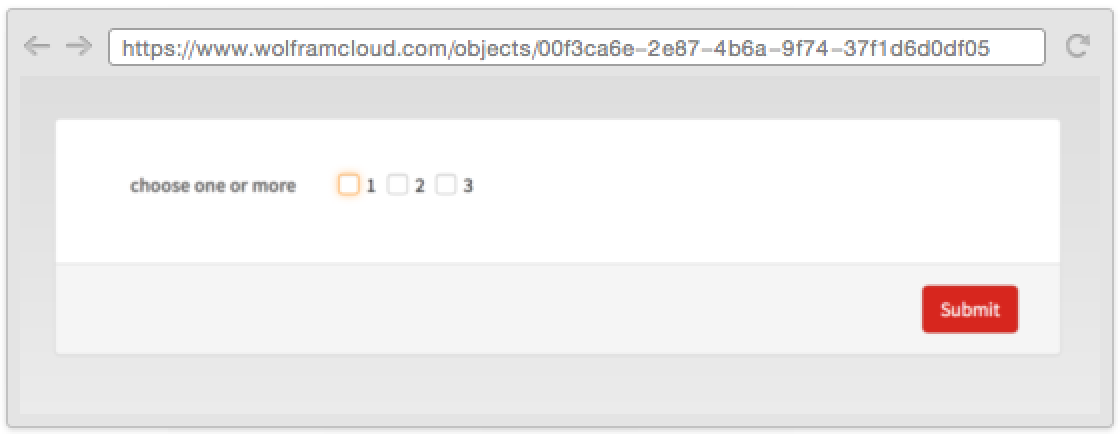
RepeatingElement 可用于创建可添加或者删除的信息栏群组:
CloudDeploy[FormFunction["field" -> RepeatingElement["String", {2, {1, 5}}]]]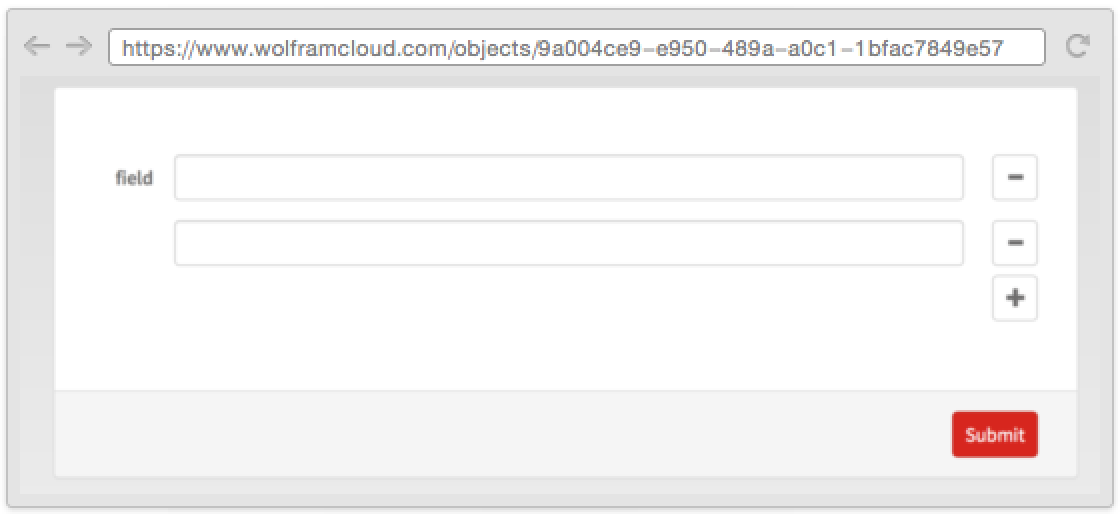
CompoundElement 可用于创建信息栏的可扩展表格:
CloudDeploy[FormFunction["names" -> RepeatingElement[CompoundElement[<|"first" -> "String", "last" -> "String"|>]]]]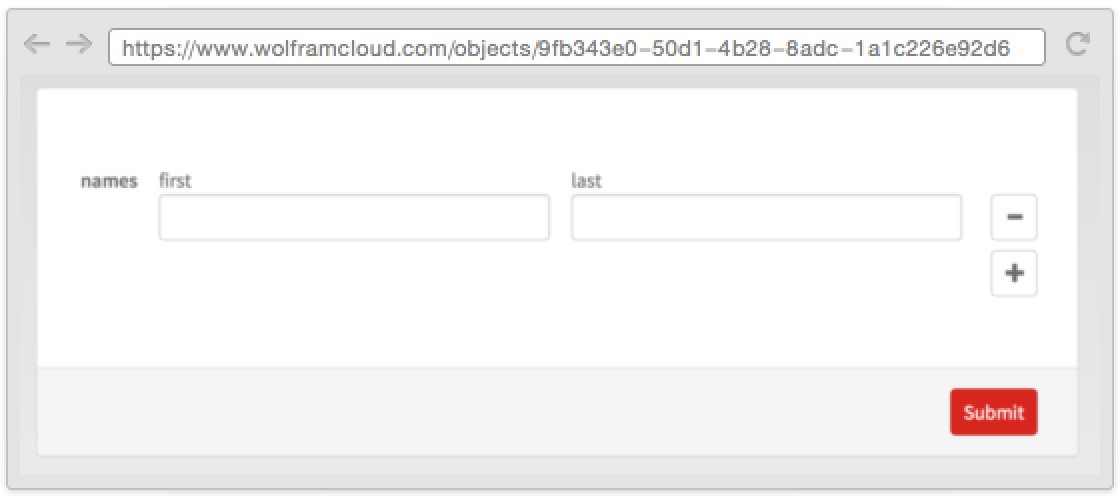
可能存在的问题 (1)
Interpreter["String"] 接受空白字符串. 但是,FormFunction 不接受空白字符串,其中,空白字符串和空白字段被同等对待:
Interpreter["String"][""]form = FormFunction[{"a string" -> "String"}, f];
form[{"a string" -> ""}]巧妙范例 (3)
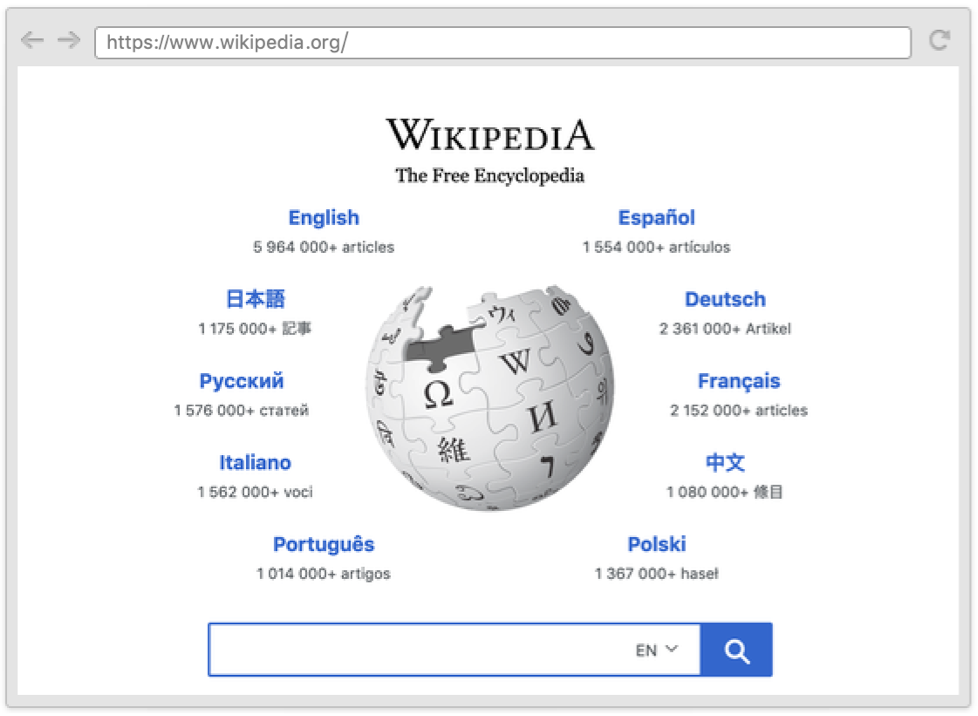
CloudDeploy[FormFunction[{"Website" -> <|"Interpreter" -> "SemanticURL", "Input" -> "Wikipedia"|>}, Composition[HTTPRedirect, First], AppearanceRules -> <|"Title" -> "WebGo!", "Description" -> "Write the name of any website, and we will take you there!", "SubmitLabel" -> "Go!"|>]]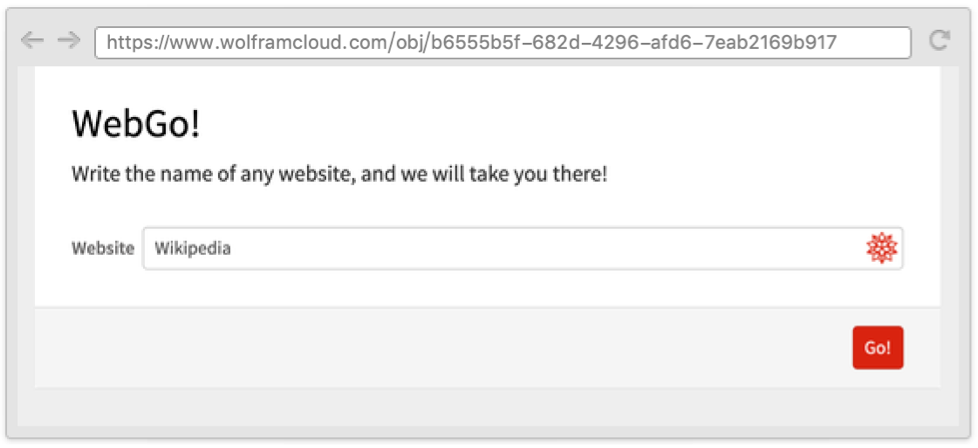
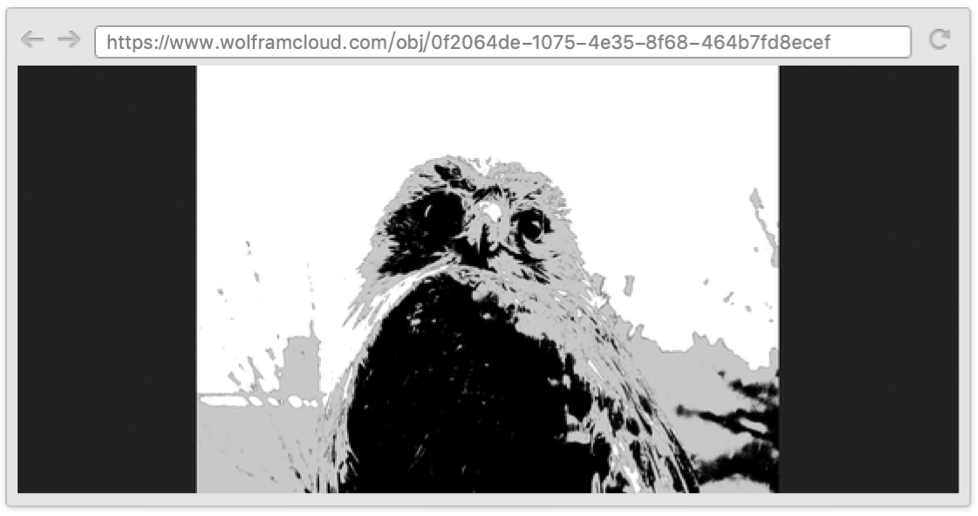
CloudDeploy[FormFunction[{"image" -> "Image", "filter" -> ImageEffect[]}, ImageEffect[#image, #filter]&, "JPEG", AppearanceRules -> {"Title" -> "Wolf(g)ram"}]]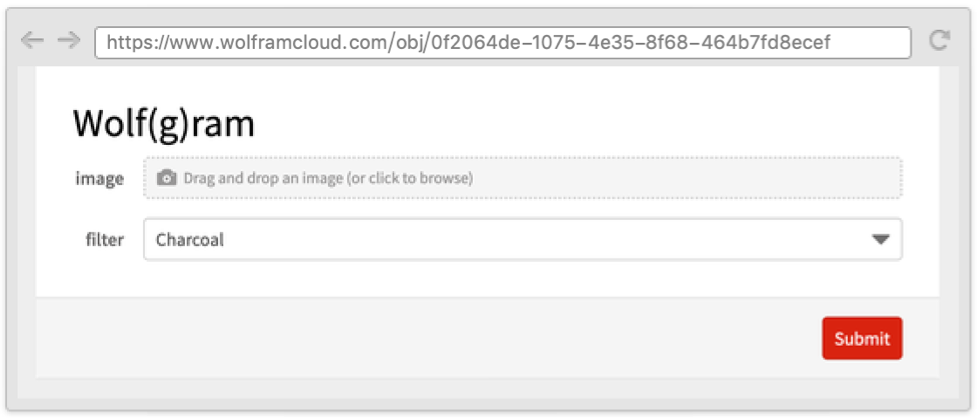
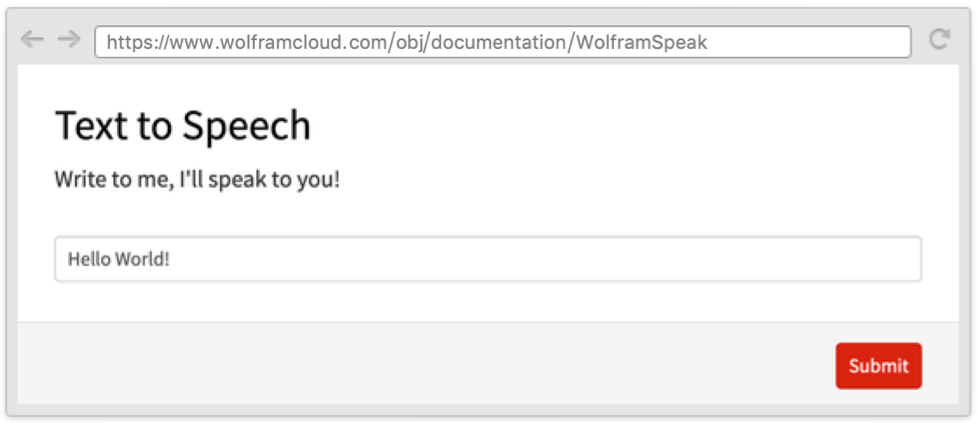
CloudDeploy[
	FormFunction[
	"Input" -> <|"Input" -> "Hello World!", "Label"  -> None|>,
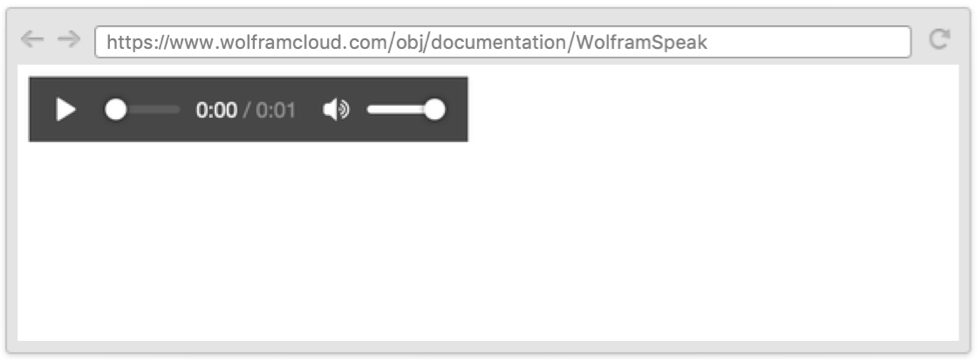
	SpeechSynthesize[#Input]&,
	AppearanceRules -> <|
	"Title" -> "Text to Speech",
	"Description" -> "Write to me, I'll speak to you!"
	|>
	], "WolframSpeak"
	]

 快速编程入门:云部署

 《Wolfram 语言入门》:创建网站和应用程序
文本
Wolfram Research (2014),FormFunction,Wolfram 语言函数,https://reference.wolfram.com/language/ref/FormFunction.html (更新于 2015 年).
CMS
Wolfram 语言. 2014. "FormFunction." Wolfram 语言与系统参考资料中心. Wolfram Research. 最新版本 2015. https://reference.wolfram.com/language/ref/FormFunction.html.
APA
Wolfram 语言. (2014). FormFunction. Wolfram 语言与系统参考资料中心. 追溯自 https://reference.wolfram.com/language/ref/FormFunction.html 年